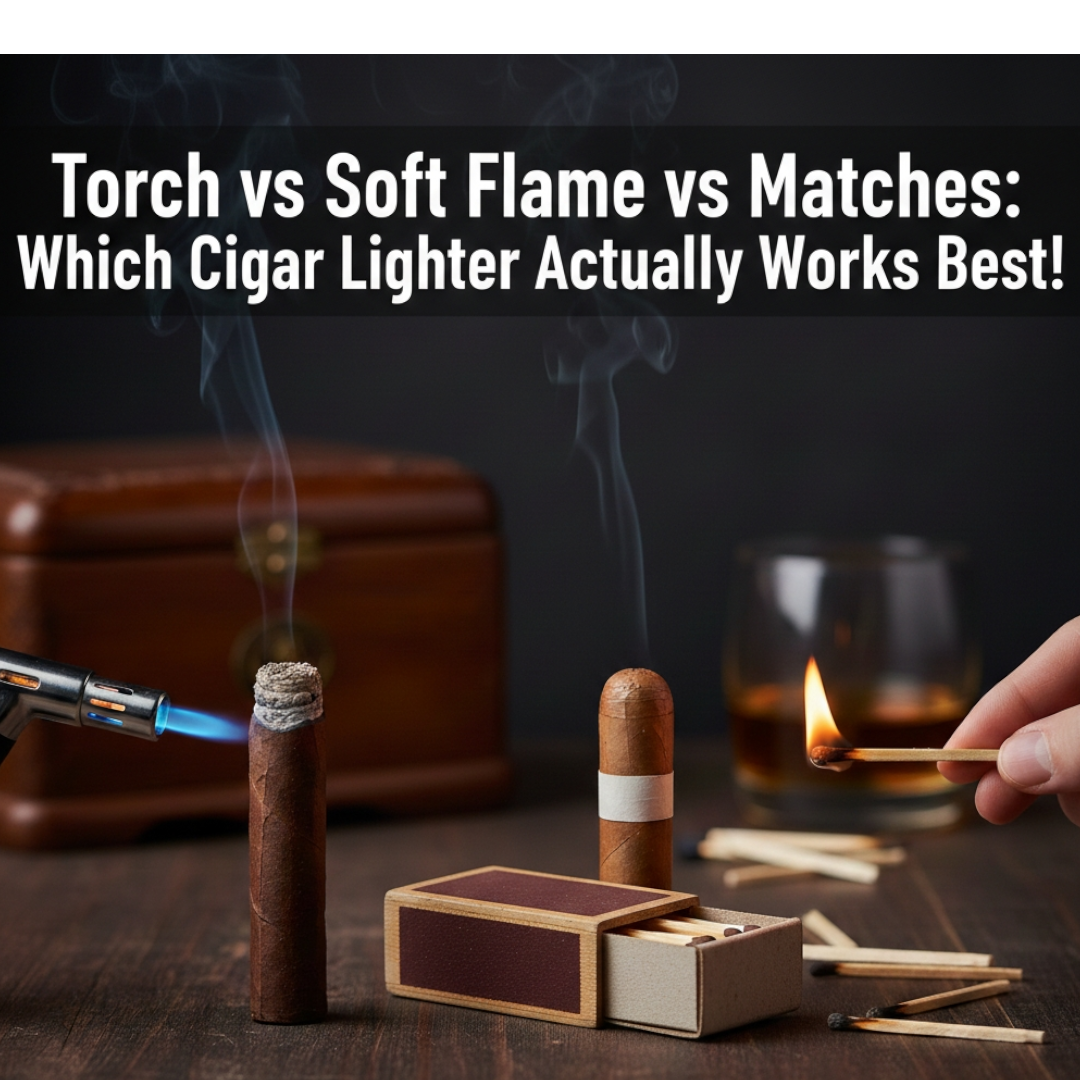
Walk into any cigar shop and you’ll face a wall of lighters—triple-flame torches, elegant soft flames, basic butane lighters, and boxes of cedar matches. Prices range from fifteen bucks to five hundred. So which one should you actually buy?
The answer isn’t about spending the most money or following trends. It’s about matching the tool to how you smoke, where you smoke, and what cigars you prefer. Let’s break down the real differences between torches, soft flame lighters, and matches so you can make an informed decision.
Understanding the Three Main Options
Before comparing specific features, here’s what separates these methods:
Torch lighters produce a concentrated jet flame burning around 1300°c. Soft flame lighters create a traditional flame at roughly 500°c. Cedar matches burn clean at moderate temperatures with zero petroleum products.
Each has genuine advantages in specific situations. None is universally “best”—they excel at different things.
Torch Lighters: The Practical Choice
Torch lighters dominate the market for good reason. They solve real problems that other methods struggle with.
What Makes Torches Effective
Reliability in wind – That concentrated jet flame cuts through breeze that would kill a soft flame or match instantly. If you smoke outdoors even occasionally, this matters.
Speed – Most cigars light in 20-30 seconds with a torch versus 45-60 seconds with other methods. When you’ve got limited time, this adds up.
Works at altitude – The pressurized butane system functions normally in Denver, Aspen, or anywhere elevation affects regular flames.
Handles large ring gauges – A 60+ ring gauge cigar lights far more evenly with concentrated heat than with a diffuse soft flame.
Beginner-friendly – The focused flame makes it obvious where heat’s going. Easier to learn proper technique.
Cleaner butane burn – Higher temperature means more complete combustion, reducing fuel taste.
Where Torches Have Issues
The same power that makes torches effective creates risks. That concentrated 2,500°F heat will scorch a wrapper if you hold it too close or keep it stationary. Damaged wrappers taste bitter and burn poorly.
The jet flame produces noticeable noise. Some find this distracting during quiet moments.
Fuel consumption runs higher than soft flames. Expect to refill more frequently.
Traditionalists argue torches lack elegance and ceremony compared to classic methods. Valid point if ritual matters to you.
Best Applications for Torches
Outdoor smoking in any conditions. Large format cigars—Churchills, double coronas, anything 54+ ring gauge. Situations requiring speed and reliability. Learning how to light cigars correctly for the first time.
For most regular cigar smokers, a quality torch serves as the primary lighter with alternatives for special situations.
Soft Flame Lighters: Temperature Control
Soft flame butane lighters operate like traditional lighters but burn clean fuel instead of naphtha. The cooler 1,000°F flame changes the entire lighting dynamic.
Soft Flame Advantages
Better temperature control – The gentler heat gives more reaction time. Harder to accidentally scorch tobacco when you’ve got an extra second to pull back.
Precision application – Some experienced smokers believe the gradual heating produces cleaner first draws by avoiding rapid temperature spikes.
Quieter operation – Just the subtle sound of burning butane. No jet engine noise.
Aesthetic appeal – High-end soft flame lighters often feature superior craftsmanship and classic designs. If the tool itself matters to you, soft flames win on appearance.
Better fuel efficiency – Burns butane slower than torches, requiring less frequent refills.
Soft Flame Limitations
Wind renders them nearly useless. Even light breeze disrupts the flame or extinguishes it completely. Outdoor reliability is poor.
Lighting takes twice as long as torches—sometimes longer. That extra minute matters when you just want to start smoking.
Altitude degrades performance significantly. Reduced oxygen at elevation makes the flame weak and inconsistent.
The slower process demands patience and attention. Not ideal when you’re rushed or distracted.
Where Soft Flames Excel
Indoor environments only—cigar lounges, home smoking rooms, anywhere wind isn’t a factor. Smaller cigars in the 42-52 ring gauge range benefit from gentler heat. Situations where you want a deliberate, unhurried ritual.
Think of soft flames as a specialized tool rather than an all-purpose solution. Great for specific contexts, frustrating in others.
Cedar Matches: The Traditional Standard
Cedar matches represent how cigars were lit before modern lighters existed. They remain popular among purists seeking the cleanest possible light.
Match Advantages
Zero fuel taste – No butane, no lighter fluid, no petroleum. Just wood smoke that complements tobacco naturally instead of competing with it.
Optimal burn temperature – Hot enough to light efficiently but not so hot that hesitation scorches the wrapper. More forgiving than torches.
Traditional experience – For aged or special occasion cigars, the ritual of match lighting feels appropriate. Part of respecting what you’re smoking.
No maintenance – Unlike lighters requiring refills and eventual replacement, matches work until they’re gone. No mechanical failures.
Historical authenticity – This is how premium cigars were enjoyed for centuries. Some find value in maintaining that connection.
Match Disadvantages
Wind vulnerability – Any breeze makes match lighting extremely difficult or impossible. Strictly an indoor method.
Time requirement – Takes longer than both torch and soft flame methods when accounting for multiple matches.
Multiple matches needed – Expect 3-4 matches per cigar. Adds cost over time compared to refillable lighters.
Burn risk – Fingers can get burned if you’re not careful or the match burns faster than expected.
Convenience issues – Requires carrying a matchbox and having matches available when you want to smoke.
When Matches Make Sense
Home smoking with guaranteed zero wind. Special or aged cigars that justify extra ceremony. Situations with ample time to enjoy the full ritual. When absolute elimination of fuel taste matters most.
Matches work best as a “special occasion” option rather than everyday solution. Keep them for cigars that deserve the traditional treatment.
Direct Comparison: Key Factors
Here’s how the three methods stack up across important criteria:
Lighting speed: Torch (45-60 sec) > Soft flame (80-150 sec) > Matches (80-150 sec)
Wind resistance: Torch (excellent) > Soft flame (poor) > Matches (none)
Scorching risk: Matches (very low) > Soft flame (low) > Torch (moderate)
Altitude performance: Torch (excellent) > Matches (good) > Soft flame (poor)
Fuel taste risk: Matches (zero) > Torch (low) > Soft flame (low)
Indoor vs outdoor: Torch (both) > Soft flame (indoor only) > Matches (indoor only)
Learning curve: Torch (easy) > Soft flame (moderate) > Matches (moderate-hard)
Maintenance: Matches (none) > Torch (refills) > Soft flame (refills)
Best ring gauge: Torch (54+) > Soft flame (38-54) > Matches (38-54)
No single method wins every category. Choose based on which factors matter most for your smoking habits.
Making the Right Choice
Your ideal lighter depends on where and how you typically smoke.
Get a Torch If You:
Smoke outdoors more than 25% of the time. Prefer larger ring gauge cigars. Value convenience and speed over ritual. Need one reliable tool that handles most situations. Are building your first cigar setup. Want the most versatile option available.
Bottom line: Torches work for the widest range of scenarios with minimal fuss.
Get a Soft Flame If You:
Smoke exclusively indoors. Prefer smaller vitola cigars. Enjoy deliberate, unhurried lighting rituals. Appreciate traditional aesthetics and craftsmanship. Already own a torch for outdoor backup. Want maximum control over heat application.
Bottom line: Soft flames serve as excellent secondary lighters for specific situations but poor primary choices for most smokers.
Get Cedar Matches If You:
Smoke primarily at home. Own special occasion cigars worth extra ceremony. Have time for traditional rituals. Want absolute zero fuel taste. Already own reliable lighters for daily use. Value historical authenticity.
Bottom line: Matches enhance special cigars but prove impractical as your only lighting method.
The Multi-Method Approach
Many experienced smokers keep several options on hand:
Daily workhorse: Quality torch lighter for most cigars and situations
Indoor alternative: Soft flame lighter or matches for controlled environments
Special occasions: Cedar matches for aged premiums and celebrations
This approach provides the right tool for each scenario without limiting yourself to one method’s weaknesses.
What to Avoid
Regardless of your preferred method, skip these options:
Zippo-style lighters – Naphtha fuel creates noticeable taste in cigars
Paper matches – Burn too quickly with excessive sulfur content
Candles – Wax and scents ruin cigar flavors
Stove flames – Impart gas taste and awkward to use safely
Cheap plastic lighters – Poor quality control leads to inconsistent flames and potential chemical odors
Quality Matters More Than Type
A well-made single-flame torch outperforms a cheap triple-flame every time. Same applies to soft flames and matches—quality construction and materials matter more than fancy features.
For torches, look for reliable ignition, consistent flame, and solid construction. For soft flames, prioritize mechanism quality over aesthetic details. For matches, choose long cedar matches from reputable sources.
Budget $30-80 for a quality torch that’ll last years. Soft flames range from $50-500 depending on brand prestige. Cedar matches cost $10-20 per box of 50.
Developing Your Approach
Start with a reliable torch lighter as your foundation. This handles 80% of smoking situations effectively.
Add soft flames or matches later as you refine preferences and identify specific use cases where they excel.
Pay attention to which method you actually reach for over time. Your habits reveal which approach suits your style regardless of what seems appealing in theory.
Don’t overthink it—any quality lighter properly used produces good results. Technique matters more than tool choice.
Learning Proper Technique
Whichever lighter you choose, correct technique determines results more than the tool itself. An expert lights perfectly with matches while a beginner struggles with expensive torches.
For complete step-by-step lighting instructions and technique details, check out the full guide at VDG Cigars.
Focus on mastering fundamentals—proper toasting, even rotation, patient lighting—before worrying about which specific tool is “best.”
The Real Answer
There’s no universally correct choice. The best cigar lighter is whichever one:
- Matches your typical smoking environment
- Handles your preferred cigar sizes well
- Fits your available time and patience
- Aligns with how much ritual matters to you
- Works reliably when you need it
Most smokers end up with multiple options for different situations. That’s fine. Build your collection gradually based on actual needs rather than trying to find one perfect tool.
Start with a torch, see where it falls short for you personally, then add alternatives to fill those gaps.
Subscribe to our newsletter and find out about all new posts
Check out out latest posts
- The living room cigar lounge
 Visiting the living room cigar lounge wasn’t like Visiting your typical cigar lounge, you know the one that almost feel like entering a forest fire… Read more: The living room cigar lounge
 - Hand-Rolled vs Machine-Made Cigars: What Every New Smoker Should Know
 If you are just getting into cigars, one of the first things worth understanding is the difference between a hand-rolled cigar and a machine-made one.… Read more: Hand-Rolled vs Machine-Made Cigars: What Every New Smoker Should Know
 - Matilde renacer robusto review
 Matilde wasn’t particularly complex in terms of flavor volume or changes between the thirds. It could be divided into two parts and the last third… Read more: Matilde renacer robusto review
 - Why Does My Cigar Taste Different Every Time?
 You pull out the same cigar you smoked two weeks ago. Same brand, same vitola, same box. You light it up expecting the same experience… Read more: Why Does My Cigar Taste Different Every Time?
 - Buying Cigars by the Box vs. Singles: Which Is Worth It?
 Every cigar smoker reaches the same crossroads eventually. Box or single cigars — do you commit to a full box or keep it flexible with… Read more: Buying Cigars by the Box vs. Singles: Which Is Worth It?
 - Buena Vista incognito short Robusto review
 Construction The Buena Vista incognito short Robusto was incredibly evenly rolled with a matte feeling to it. The small, thick size felt cute but yet… Read more: Buena Vista incognito short Robusto review
 - Should Beginners Buy Cigars by the Box or Singles?
 Starting out in cigars means making a lot of decisions before you even light up. One of the first — and most misunderstood — is… Read more: Should Beginners Buy Cigars by the Box or Singles?
 - Top 25 Best Father’s Day Cigars 2026
 Every cigar on this list has been lit, smoked, and reviewed on vdg-cigars.com. No shortcuts, no sponsored placements. Looking for the best Father’s Day cigars… Read more: Top 25 Best Father’s Day Cigars 2026