
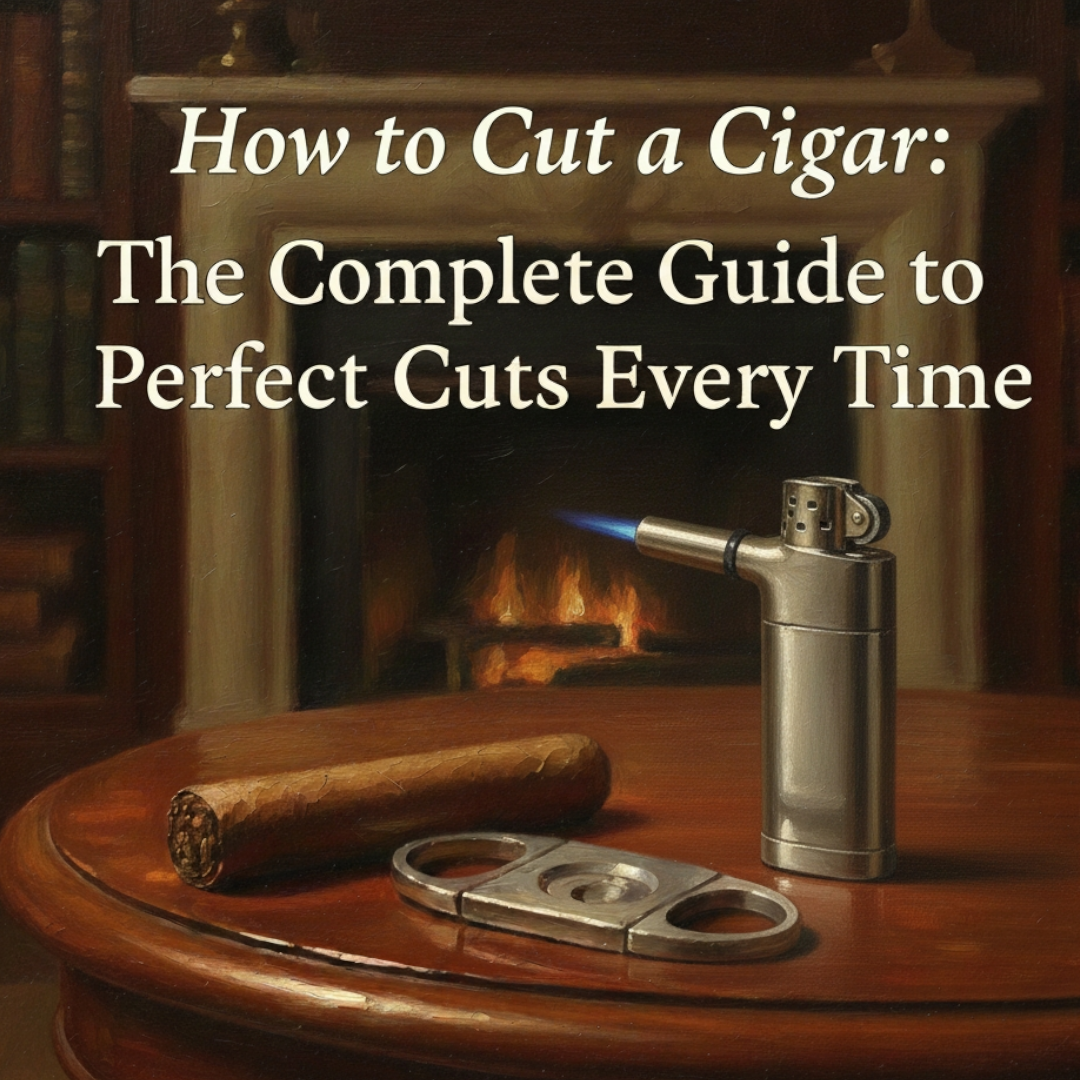
Making that first cut into a premium cigar is one of those moments where you realize there’s actually a right way and a wrong way to do this. And man, I’ve seen some absolute massacres over the years.
Last month I’m sitting with a friend, he pulls out a Davidoff Escurio Gran Perfecto . I’m watching him, thinking nice choice, when he proceeds to use what I can only describe as the world’s dullest guillotine cutter. The wrapper basically exploded. Tobacco everywhere. He spent the next hour picking bits off his tongue while his cigar slowly fell apart in his hands.
Here’s the thing nobody really tells you when you’re getting into cigars – the cut matters way more than most people think. You’re not performing brain surgery or anything, but you are absolutely setting up your entire smoking experience. Get it wrong, and you’ll spend the next hour fighting with your cigar instead of enjoying it. Get it right, and everything just flows.
Why Your Cut Actually Matters (More Than You’d Think)
Every cigar has what we call a cap. That’s the little rounded top part that the roller applied by hand. This isn’t decorative – it’s literally holding the entire wrapper leaf together. When you cut through it correctly, you’re creating an opening that lets air flow through the cigar while keeping everything structurally sound.
Cut too much off? The wrapper starts to unravel. You’ll end up with tobacco in your mouth and a cigar that’s basically disintegrating. Cut too little? You’re trying to draw smoke through what feels like a coffee stirrer. Neither is fun.
The goal is simple: remove just enough of the cap to create an opening for smoke while leaving enough cap to hold the wrapper secure. Look for that line where the cap meets the wrapper – you wanna cut just above that seam.
The Straight Cut: Where Most of Us Live
This is where I started, where you’ll probably start, and honestly where most of us stay. The straight cut works beautifully on almost every cigar, and there’s a reason it’s the most common method.
When you’re using a guillotine cutter (either single or double blade), here’s what actually matters. Place the cigar in the cutter with the cap facing the blade. Position it so you’ll remove just that top portion we talked about. Now here’s the key part that separates okay cuts from great ones – don’t slowly squeeze the cutter like you’re afraid to commit. Make it quick. Swift. Decisive. A clean, fast cut prevents the wrapper from tearing or getting all raggedy.
Double blade guillotines give you a cleaner cut than single blade versions because they’re cutting from both sides at once. The wrapper has nowhere to tear. They cost more, yeah, but if you’re serious about your cigars it’s absolutely worth it. I’ve got a Xikar XO that I’ve been using for probably five years now, still cuts like new. It has lasted so long that I repainted it to give it a facelift.
One mistake I see constantly – and I mean CONSTANTLY – is people placing the cigar too deep into the cutter because they’re nervous about cutting too little. Remember this: you can always cut more. You cannot put wrapper back on. Start conservative. If the draw feels too tight after your first cut, take a bit more off. No big deal.
The V-Cut: My Go-To for Torpedos
V-cutters create a wedge-shaped notch in the cap instead of removing the whole top. This method has blown up in popularity over the last few years, and for good reason. It’s nearly impossible to mess up in a way that damages the cigar.
What I love about the V-cut is that concentrated draw. Because the opening is smaller but deeper, you get this focused stream of smoke that just tastes better to me. The wrapper stays completely intact, so there’s zero risk of unraveling, even on cigars with those delicate Connecticut wrappers that seem to fall apart if you look at them wrong.
I particularly love V-cuts for figurados and torpedos. These tapered cigars can be tricky with straight cuts because you’re working with less surface area. The V-cut just goes straight down the middle and boom – perfect opening every time.
The downside? A V-cut can sometimes create a tighter draw than a straight cut on the same cigar. Some people love this. Others find it restrictive. It really comes down to what you prefer. Try both methods on the same brand and see which draw you like better.
The Punch Cut: For When You Want Control
Punch cutters create a small circular hole in the cap, usually between 7mm and 9mm in diameter. This is for people who want absolute control over their draw and don’t mind a more concentrated smoke.
Using a punch is straightforward. Press the circular blade into the cap, twist slightly, pull out a small plug of tobacco. Done. The result is a tight, focused draw that keeps all the wrapper intact. Because you’re removing so little material, there’s basically no chance of damaging the structure.
I reach for my punch cutter mostly with robustos and coronas. The smaller ring gauge works perfectly with that punch opening. On larger cigars like churchills or double coronas, one punch might not give you enough airflow. You can make two or even three punches if needed, but at that point you might as well just straight cut it.
What About All Those Other Fancy Cuts?
You’ll see all sorts of cutting methods out there. The shuriken cut where you make multiple V-cuts creating a star pattern. The cross cut with two perpendicular straight cuts. People who just bite the end off like some kind of cowboy movie character.
Most of these are either unnecessary or just plain dumb. The shuriken looks cool in YouTube videos but doesn’t actually improve anything about the smoke. The cross cut can work on huge ring gauges, but a proper straight cut does the same thing with less risk. And biting? Just… don’t. Please. You’ll end up with an uneven, ragged mess and probably some wrapper in your mouth. Not a good look.
Your Cutter Actually Matters
I’ve used everything from cheap plastic cutters to hand-forged precision instruments that cost more than some of my dress shoes. And yeah, the difference is real.
A sharp cutter makes a clean cut. A dull cutter crushes and tears the wrapper. That’s it. That’s the whole equation. You don’t need to spend a fortune – my favorite cutter cost $30 – but don’t buy the $3 one from the gas station either. Look for stainless steel construction with sharp blades. Xikar and Colibri both make excellent cutters at reasonable prices that’ll last for years.
Keep your cutter clean too. Tobacco gunk builds up on the blades and affects cut quality. Quick wipe with a paper towel after each use takes two seconds. I’m lazy about a lot of things but not this.
And here’s my controversial take that gets me weird looks: I carry multiple cutters. A double blade guillotine for most situations, a V-cutter for torpedos and when I want a tighter draw, and a punch for smaller ring gauges. They each have their place, and having options means every cigar gets the cut that works best for it. Am I overthinking this? Maybe. Do I care? Not really.
Common Mistakes (That I’ve Definitely Made)
The most common mistake is cutting at an angle instead of straight across. This creates an uneven opening that affects the draw and makes one side burn faster. Take your time, make sure the cigar is perpendicular to the blade, cut straight. Seems obvious but I still catch myself rushing sometimes.
Another issue – cutting too much in one go because you’re impatient. If you’re unsure, cut less. You can always remove more. You can’t undo a cut that removed too much cap. This should be obvious but apparently it’s not because I see it happen all the time.
For beginners, start with a straight cut using a quality double-blade guillotine. Master that technique first. Once you’re comfortable and consistent, then experiment with V-cuts and punches. Build your skills progressively instead of jumping around trying everything at once and getting frustrated when none of it works right.
Also – and I learned this the hard way – don’t try cutting a cigar that’s been sitting in your car in summer heat. The wrapper gets soft and sticky, and when you cut it everything just mushes together. Let it rest in proper humidity for a day first.
Conclusion
Cutting a cigar isn’t rocket science, but it does require you to pay attention. Use a sharp cutter, position the cut just above the cap line, and execute with confidence. Whether you prefer straight cuts, V-cuts, or punches, the basics stay the same: remove just enough cap to create proper airflow while keeping everything structurally sound.
Every cigar you smoke is the result of someone’s craftsmanship. From the farmer who grew the tobacco to the person who rolled it by hand. Honoring that work starts with a proper cut. Take the extra few seconds to do it right, and you’ll taste the difference.
Now go enjoy that cigar the way it was meant to be experienced. And maybe invest in a decent cutter if you’re still using that plastic one.
FAQ
Oh absolutely, and it’s painful to watch. If you cut past the cap line into the main wrapper, you’re gonna compromise the entire structure. The wrapper starts unraveling as you smoke, tobacco bits end up in your mouth, and the whole thing falls apart. Stick to removing just 1/16th to 1/8th inch from the head. When in doubt, cut less. You can always take more off if the draw’s too tight, but you can’t glue wrapper back on.
You’re basically setting yourself up for an hour of frustration. Cut too shallow and you’re fighting for every draw, which makes you puff harder, which overheats the cigar and ruins the flavor. Cut at an angle and one side burns faster than the other – super annoying. Cut too deep and the wrapper unravels. Each of these problems is completely avoidable with proper technique and a sharp cutter.
Start with a straight cut using a double-blade guillotine. Works on virtually every cigar shape, gives you a good draw, easiest to master. Once you’re comfortable making consistent straight cuts, then mess around with V-cuts and punches to find what you like. But master the basics first. Don’t try running before you can walk and all that.
Yes and no. You don’t need a $200 cutter – that’s mostly for showing off. But that $5 plastic thing from the gas station will absolutely let you down at the worst possible moment. A quality cutter in the $20-40 range with sharp stainless steel blades will serve you well for years. The difference between a cheap cutter and a decent one is massive. The difference between a decent cutter and an expensive one is mostly aesthetics and bragging rights.
You can, with limitations. If your first cut was too shallow, making a second cut slightly deeper is totally fine. If you cut at an angle, you can sometimes correct it with a careful follow-up cut. But if you already cut too much and damaged the cap, there’s no fixing that. Prevention beats correction every time. Take your time with that first cut.
Double blade cutters cut from both sides at the same time, which creates a cleaner cut with less chance of tearing the wrapper. Single blade cutters press the cigar against a fixed surface while one blade cuts through, which can cause slight compression or uneven cuts. Both work fine, but double blades are worth the small extra investment for consistently better results. I switched to double blade years ago and never looked back.
Subscribe to our newsletter and find out about all new posts
Check out our latest posts
- What Is a Connecticut Cigar? The Wrapper Explained
 A Connecticut cigar is named after its wrapper. Not the country it was made in, not the filler inside it. The tobacco in the middle… Read more: What Is a Connecticut Cigar? The Wrapper Explained
 - How a Cigar Is Made, From Seed to Shop
 The cigar in your hand took longer to make than most people think, and almost none of that time was spent rolling it. Rolling is… Read more: How a Cigar Is Made, From Seed to Shop
 - Top 30 Best Winter Cigars (2026): Reviewed by Flavor, Body and Smoke Time
 Winter changes the whole cigar. The evenings start at four. The smoking chair moves closer to the fire, or the cigar moves out to the… Read more: Top 30 Best Winter Cigars (2026): Reviewed by Flavor, Body and Smoke Time
 - Cigar Ring Gauge in mm: Every Size, and What Thickness Actually Changes
 Ring gauge is how thick a cigar is. The second number in a 5 x 50 is the ring gauge, and it counts in sixty… Read more: Cigar Ring Gauge in mm: Every Size, and What Thickness Actually Changes
 - Horacio 8 Classic Review: A Small, Nutty Costa Rican Everyday Smoke
 The Horacio 8 is a short, medium-bodied cigar that packs plenty of flavor into a compact format. Over 50 minutes it works through sweet almond… Read more: Horacio 8 Classic Review: A Small, Nutty Costa Rican Everyday Smoke
 - Karina Owen: The Woman Who Built Her Own Name (Part 3 of 3)
 Something personal before any of this begins. I have been working on Karina Owen’s story for a few months now. Sitting here writing the last… Read more: Karina Owen: The Woman Who Built Her Own Name (Part 3 of 3)
 - Horacio Heritage 6 Review: A Full-Bodied Costa Rican With a Perfumed Floral Edge
 The Horacio Heritage 6 is a short, full-bodied cigar with an unusual, perfume-like floral character that sets it apart. Over 45 minutes it works through… Read more: Horacio Heritage 6 Review: A Full-Bodied Costa Rican With a Perfumed Floral Edge
 - Karina Owen: The Years That Taught Her People (Part 2 of 3)
 Part 1 of this interview ended with a door Karina Owen left unlocked. She had changed her degree, kept her credits, and told herself that… Read more: Karina Owen: The Years That Taught Her People (Part 2 of 3)
