
There’s an unspoken rhythm to enjoying a fine cigar. Each draw, each note of flavor, each pause between puffs—all of it contributes to a ritual that is as much about presence and patience as it is about taste. Yet, no matter how attentive we are, life sometimes intervenes. The phone rings, a conversation turns lively, or you simply set your cigar down to savor a drink, and by the time you return, the ember has gone out. For some, that moment can feel like the experience has ended. But here’s the truth every seasoned aficionado knows: a cigar that has gone out can live again. Relighting, done with care, is not a failure of the smoker but a continuation of the ritual.
This guide walks you through the art of relighting a cigar the right way, blending practical steps with an understanding of why they matter. Relighting is less about recovering from a mistake and more about respecting the craftsmanship rolled into every leaf.
Why Do Cigars Go Out?
Unlike cigarettes, cigars are hand-rolled natural products without additives that keep them burning. A cigar requires attention, steady puffs, and proper airflow. If you set a cigar down for more than a few minutes, the ember cools naturally. Puffing too slowly can let the burn stall, while puffing too quickly overheats the tobacco and ruins the flavor.
So when your cigar goes out, it’s not a flaw. It’s a reminder to stay present with it.
Step 1: Clear the Ash
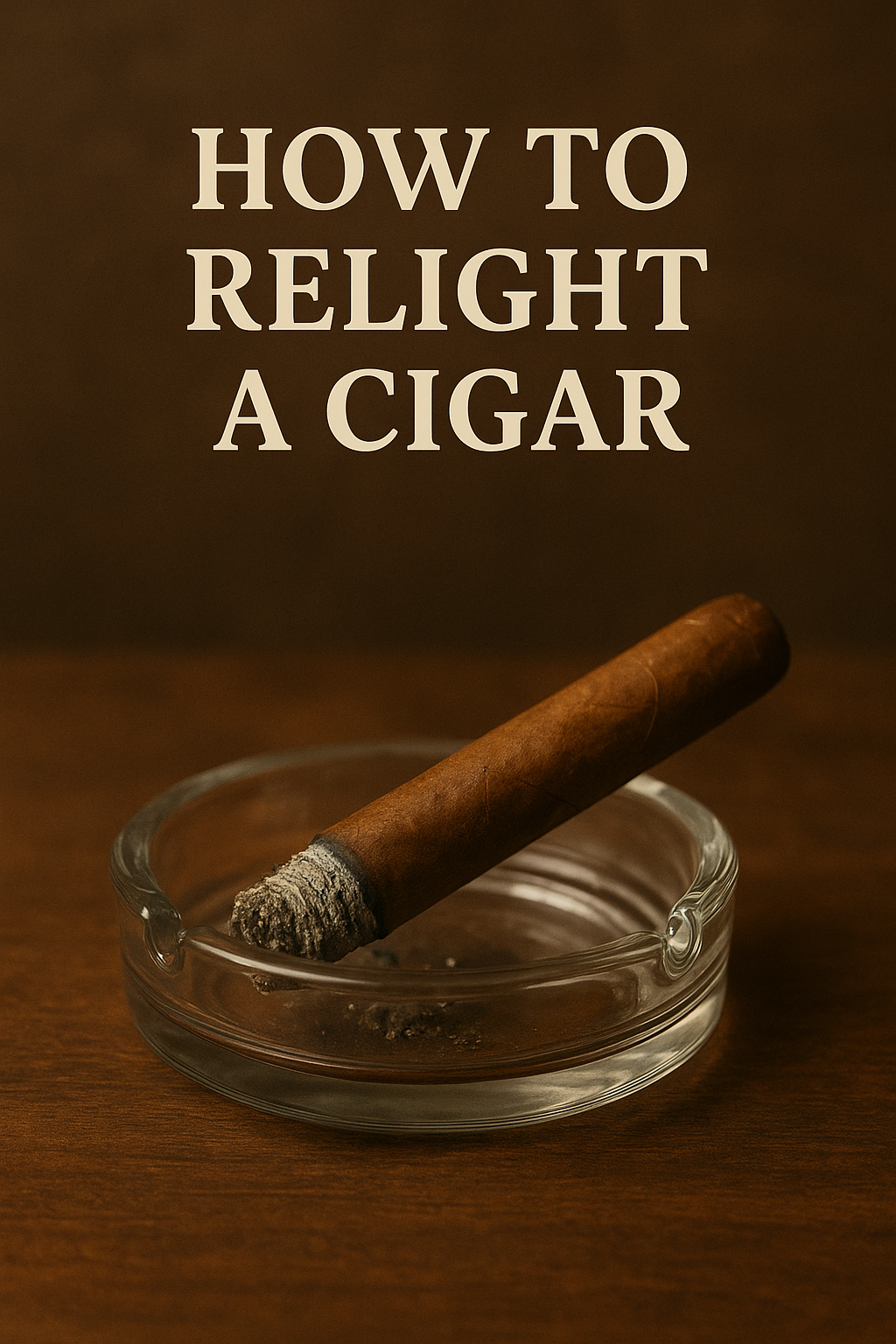
When you return to a cigar that has gone out, gently tap the foot against an ashtray. Removing excess ash exposes fresh tobacco, allowing the flame to catch evenly. Skipping this step risks bitterness on the relight.
Step 2: Purge the Cigar
Hold the cigar away from your face and gently blow through it, pushing out that old smoke. This simple purge helps prevent harsh bitter flavors from reaching your palate when you take the first puff after relighting.
Step 3: Toast the Foot
Bring your lighter close without touching the flame directly to the tobacco. Rotate the cigar slowly, letting the heat toast the foot evenly. The goal is to reignite the wrapper, binder, and filler together. A proper toast sets the stage for a smooth relight.
Step 4: Gentle Draws
Once the foot glows evenly, take slow, steady puffs. Avoid aggressive pulling—it overheats the tobacco. Patience here rewards you with a balanced smoke, almost as if nothing interrupted the cigar at all.
Step 5: Embrace the Change
Even with the best technique, a relit cigar won’t always taste identical to its first light. Some nuance shifts may occur, a well-made cigar retains its character most of the time. Instead of resisting the change, appreciate it. The slight evolution in flavor is part of the cigar’s journey.
When Not to Relight
If a cigar has been sitting for hours —or overnight—the oils may have soured. Relighting in that case often produces harshness. A good rule of thumb: if it’s been more than an hour or two, it’s best to start fresh.
A cigar that has gone out isn’t ruined. With the right approach—clear the ash, purge the smoke, toast carefully, and draw patiently—you can restore the experience and continue the journey. The flavor may shift slightly, but that change is part of the charm.
Relighting doesn’t diminish a cigar. Done correctly, it reminds you why cigars are not just tobacco but tradition, craftsmanship, and a lesson in taking your time.
Subscribe to our newsletter and find out about all new posts
Check out our latest posts
- Robusto vs Toro: Real Smoke Times, Flavor and Which One to Choose
 Robusto vs toro. Stand in front of any walk-in humidor long enough and you will face that choice. Two shelves. Two sizes. Often the same… Read more: Robusto vs Toro: Real Smoke Times, Flavor and Which One to Choose
 - Macanudo Maduro Diplomat Review: A Smooth, Fruity Maduro in a Short Figurado
 The Macanudo Maduro Diplomat is a mild-to-medium figurado that offers more brightness than most maduros. Over 60 minutes it works through sweet cashew, remarkably ripe… Read more: Macanudo Maduro Diplomat Review: A Smooth, Fruity Maduro in a Short Figurado
 - Brun del Ré Cigars and Carlo Corazza: The Costa Rican Puro That Ferments for Over a Year

By Peter Stefanic, VDG Cigars There is something magical about cigars and their ability to bring people together. When my interview with Carlo Corazza of Brun del Ré began, I had pictured us starting at the beginning, with the story of the cigars. Instead we spent the first thirty minutes talking about everything from politics […]
- The story of Karina Owen Part 1 of 3: At the End of the Night

A Instagram notification. A new follower. @staynclassyowen. We had been circling each other for the better part of a year by then, the way people in this business do. Two people working in cigars, on two different continents, exchanging messages about a collaboration that never quite got scheduled. Friendly. Professional. Going nowhere in particular, that […]
- The Leaf That Changes Everything: Why La Flor de Zaida and Medio Tiempo Belong in the Same Sentence

You buy a watch. A good one. You expect a reliable movement. But when you open the case, sitting inside is a hand-finished Swiss caliber. Every gear, every spring, every component touched by human hands. The same one that drives a Rolex Daytona. In every piece. As standard. That is what Antonio Piredda built with […]
- La Flor de Zaida Brings the Diamond Collection and Ralf Moeller to InterTabac 2026

Some brands go to Dortmund to take orders. La Flor de Zaida goes to make a statement. InterTabac opens at Messe Dortmund on Tuesday, September 15. Three days, more than 800 exhibitors, around 14,500 trade visitors. In Hall 4, something unique is about to happen. Antonino Piredda and La Flor de Zaida are at booth […]
- Casa Magna Colorado Torito Review: A Rich, Approachable Everyday Full-Bodied
 The Casa Magna Colorado Torito packs a lot of cigar into a short, thick format. Over an impressive 105 minutes this Nicaraguan puro works through… Read more: Casa Magna Colorado Torito Review: A Rich, Approachable Everyday Full-Bodied
 - Aroma de Nicaragua Connecticut Toro Review: A Long, Gentle Nicaraguan With Unusual flavors
 The Aroma de Nicaragua Connecticut Toro is a mild-to-medium cigar that quietly overachieves. Over an extraordinary 100 minutes it works through cedar, nutmeg, vanilla bean,… Read more: Aroma de Nicaragua Connecticut Toro Review: A Long, Gentle Nicaraguan With Unusual flavors
