
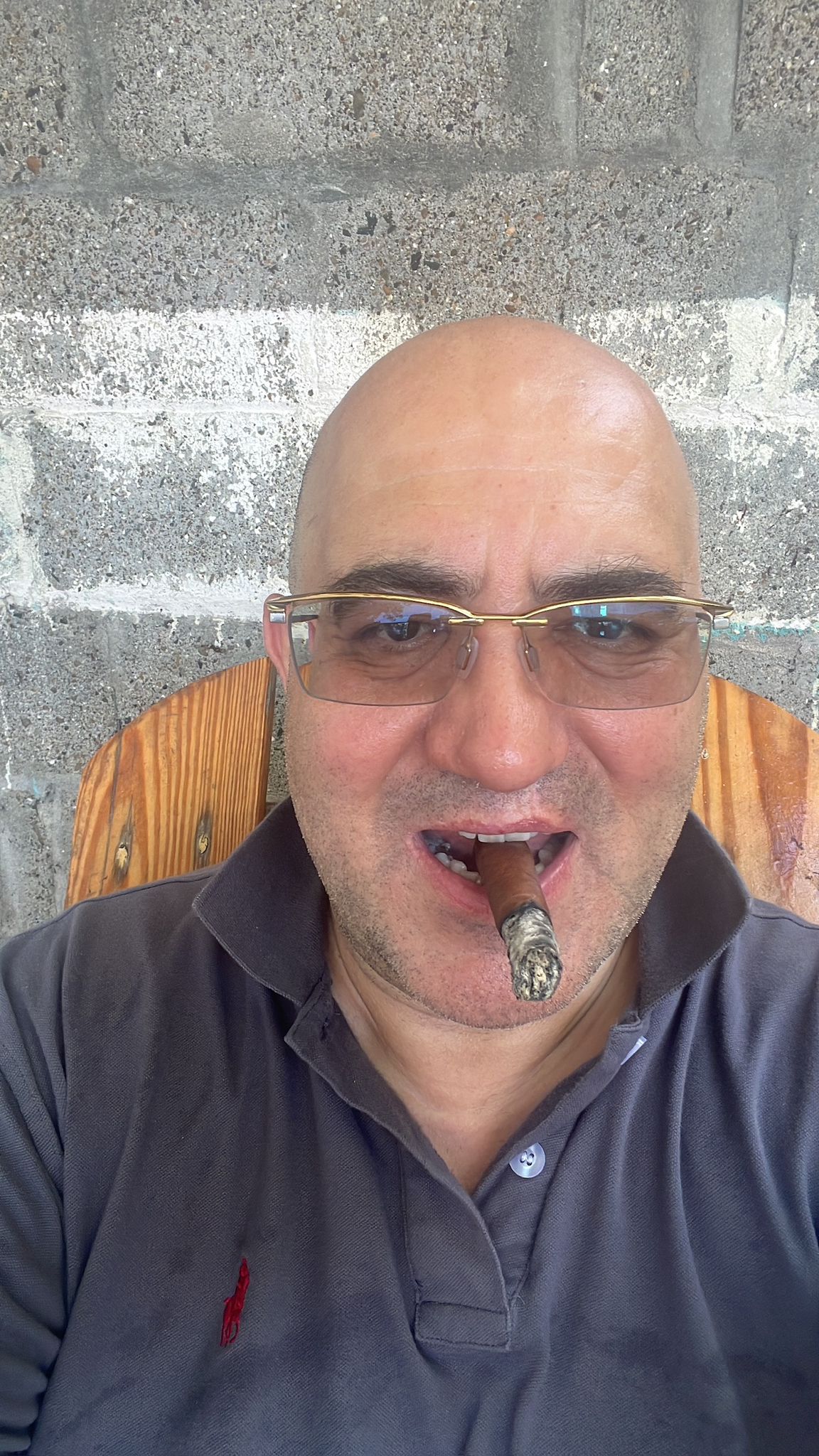
Like the Phoenix rised from its own ashes, flora de Zaida got new life from a long time in the shades of the forgotten.
My interview with Antonino Piredda was nothing short of interesting. Instead of putting his name on cigars or buying an existing brand, Antonino chose a path all his own. A path that honors and places great responsibility on the shoulders of a person. This is the story of La Flor de Zaida and Antonino’s path to honor a man and his brand who was forced to flee his country of birth and leave his dreams behind.
The Beginning of La Flor de Zaida

Flor de Zaida was founded in Cuba by Manuel Hernandez and can be traced back as far as the 1920s. What Manuel didn’t know at the time was that he was planting the seeds for a history that would span over 100 years.
Manuel was a well-established tobacco and cigar merchant. A person who had a love for what he did. His invoices can be traced to many places in the world.
Manuel’s goal was clear, to create the best cigars in Cuba – cigars that were unique and luxurious, cigars that reflected the true meaning of craftsmanship. Manuel chose to establish his factory in Pinar del Rio, Cuba. The name he chose is, as you already know, Flor de Zaida, but what you most likely haven’t discovered yet is the deep meaning of the name itself. Manuel named the cigars after his beloved wife Zaida, something that not only honors, but gives it a deeper passionate meaning. If you dig a little deeper, you will find that Zaida is a feminine Arabic name with the meaning of fortunate and prosperous.

The tobacco chosen was no coincidence or budget choice, making the best cigars on the market required nothing less than high quality tobacco and that is what was used in La Flor de Zaida’s cigars and the rolling of the cigars had to be nothing less than perfect. The rumor spread about the La Flor De Zaida cigars and people travelled from far and wide to try Manuels blends. His eye for quality and blend became popular and it wasn’t long before he also started making limited edition cigars. Cigars that quickly became collectors’ items.
Although the brand was founded in the 20th century, trademarks could not be registered until the 50s, the year was 1956 when Flor de Zaida was registered.


Tragedy Strikes and La Flor de Zaida is Buried in the Ashes
What happened in Cuba during the 1950s and 1960s is something most people born before the 1990s have at least a passing familiarity with. After years of guerrilla warfare, Fidel Castro wrested power from Fulgencio Batista on January 1, 1959. Within a year, his revolutionary government had nationalized every private business on the island — cigar factories and tobacco plantations included, many of them family-owned for generations. Owners were pushed out without fair compensation and left with little choice but to flee.
The United States responded with a sweeping trade embargo, banning all Cuban imports. It was the beginning of a cold war between the two countries that would come dangerously close to turning hot during the missile crisis of 1962.
Before any of that, Cuban cigars had set the standard by which the rest of the world measured quality. The soil in Pinar del Río was unlike anything found elsewhere — dark, nutrient-rich, and forgiving in the way it produced tobacco with a consistency that made aficionados loyal to specific brands for decades. Growers understood this and treated their fields accordingly, coaxing the same character from their crops year after year. The rollers held themselves to the same standard. The finished product reflected both.
That changed abruptly and slowly at the same time.
The best cigar makers left. Some managed to take tobacco seeds with them. The knowledge, the craft, the institutional pride that had built the Cuban cigar industry over a century — it walked out the door along with the people who carried it. Castro had nationalized the factories, but he could not nationalize the expertise.
The impact on the cigar world serves as a near-perfect microcosm of the broader brain drain Cuba suffered in those years. And before Kennedy signed the formal embargo into law, he reportedly sent his press secretary out to secure a personal supply of his favorite Cuban brands — a detail that says something honest about the gap between policy and personal taste.
What followed was the birth of an entirely new industry, built by Cuban exiles in new countries, planting familiar seeds in unfamiliar soil.
Not many years after registering La Flor de Zaida Manuel had to flee the country and leave everything he had built behind Because government taking control and any Capitalist where the government enemies. La flor de Zaida which he had proudly built over 30 years with pride and utmost respect for the craft was buried in the ashes of the forgotten.

Imagine being forced to take your family and flee the land of your birth, leaving behind everything you built with pride and never being able to see and feel it again. That’s the feeling Manuel Hernandez and his family had to go through.
Antonino Steps in Like the Phoenix and Gives La Flor de Zaida a New Bright Life
Legends say that the Phoenix bird lived for hundreds of years, built a nest of twigs and then set the nest on fire. The bird died with its nest and was reborn from the ashes as a young Phoenix. Phoenix symbolizes rebirth, immortality and a new life.
A rebirth is exactly what La Flor de Zaida got when Antonino decided to follow his dreams.
Antonino Piredda who is Italian native born in Switzerland, studied gemology and began his carrier working in the luxur Consumer goods Market at 22 years he know its time to explorer the world and started different Companys on his own. He has always had a fondness for cigars and had always dreamed of starting his own brand. In 2020-2021 it was clear — Antonino began to follow one of his biggest dreams. Like Manuel, Antonino wanted to create some of the world’s best cigars with the highest quality possible. Instead of founding a brand from scratch, he chose to take a slightly more difficult route.
During Covid he began researching pre-Castro Cuban cigar history with an intensity that only someone who genuinely loves the subject can sustain. After Covid he started traveling again — visiting multiple destinations over several years, searching, studying and following the trail wherever it led.


Those journeys eventually brought him to David, an antique dealer with personal ties to members of Manuel’s family. Antonino told him about his dream: to bring a brand with a deep and significant history back to life. From that point, Antonino set about collecting everything he could find. Documents, facts, firsthand accounts. He visited the locations where La Flor de Zaida had originally taken root, exploring as thoroughly as the trail allowed. Piece by piece, over two to three years, he acquired whatever he could get his hands on — and the search, he will tell you, is still ongoing.
He Searched Deep in Cuba’s Archives and Found La Flor de Zaida

Creating a blend, coming up with a name with meaning is one thing. Following your dream while merging it with the dream of someone else who has passed away requires something extra. The hours, days and weeks passed while Antonino feverishly searched for everything there was to find about Manuel, his history, business papers, information about his private life, everything you can think of that could be found and bought was bought. Continuing someone’s dream is a big responsibility. You could almost say that the work he put into learning about Manuel is the same work you do when researching your family tree to find answers about where you come from.
Manuel’s and Antonino’s Dreams Were the Same, to Create Some of the World’s Best Cigars
While Manuel had his factory in Cuba, La Flor De Zaida was moved to the Dominican Republic, but with the same spirit, to create the best cigars in the world.
I want to spoil a little before we go into depth. The cigars from La Flor De Zaida and their reputation have become so popular that they are enjoyed by among others stars such as Arnold Schwarzenegger, Sylvester Stallone, Anthony Anderson, Russel Peters, Danny DeVito, J Balvin, Ralf Möller, Marshall Faulk, Wolfgang Puck, Mario Barth Celebrity Tattoo Artist and Glynn Turman.


It’s not a gimmick, it’s something celebrities treat themselves to to relax from all the stress.
The Tobacco is Crucial
Medio Tempo was for a long time almost a myth. You had heard of it but not many people kept the tobacco. Medio Tempo is extremely rare and grows on about 10-15% of all plants (if you are lucky). They grow at the top of the plant usually only 1-2 leaves per plant, which makes the volume extremely small, and they are also smaller, which makes it less lucrative. For this reason, many producers choose not to use Medio Tempo.
In true La Flor De Zaida spirit of making some of the world’s best and most unique cigars, Medio Tempo is a part of every cigar and blend. While most producers put it in limited editions, La Flor De Zaida uses Media Tempo tobacco as a standard in their cigars.
Like Manuel, Antonino uses only the best tobaccos available for La Flor De Zaida.
Aging
It takes time, it takes patience and it takes an investment of capital. Letting a product rest for several years is something many manufacturers don’t do, the money has to come in quickly and with that the quality of the flavors also goes down a bit. Many use 1-2 year aged tobacco and let the cigars rest for 6-12 months.
Antonino and La flor de Zaida go a step further, quality comes before quantity. To raise the quality and the ultimate experience, La flor de Zaida’s process looks like this. Gold Line we age Tobacco minimum 3 years some up to 5 years then we let Cigars rest minimum 24 months up to 36 months.
The extra long process allows the oils to emerge more, the flavors to fuse with each other and become complex and rich.
Quality Control
La flor de Zaida always ensures that every cigar is roll perfectly smooth not to tight to assure an easy draw experience. Every cigar is individually drawn to maintain its quality.


A Goal You Have Probably Never Heard Before
La Flor De Zaida is originally a Cuban cigar brand created by Manuel Hernandez continued by Antonino Piredda who moved it to the Dominican Republic. One of Antonino’s goals has always been to reunite La Flor De Zaida with its homeland and have part of its production in Cuba. A goal that is blocked by politics and closed borders. I personally think it would have been great both in terms of tobacco and to see a reunion of a heritage coming home after fleeing.
I don’t know if it’s me who watched too much film in my younger days, but something about it feels like a strong drama movie with a good ending. Imagine Manuel’s dream of La Flor De Zaida, the escape from oppression, dreams that are crushed, Antoninos several years long search for documents, the hard work for the cigars to be reborn and the reunion to what was once intended. The feeling i got is similar to the movie Titanic when they search for the Heart of the Ocean Necklace Rose had when Jack painted a picture of her. The day the borders open and it’s possible to establish La Flor De Zaida production again in Cuba, is the day Antoninos goal can become a reality, to bring back La Flor De Zaida to its original soil.
What Also Distinguishes Antonino and La Flor de Zaida
Beyond the tobacco itself, Antonino has made a conscious decision to use his brand as a platform for something larger. In an industry that often talks about legacy without really meaning it, he is one of the few who backs it up with action.
La Flor de Zaida has become a fixture at high-profile charity events, where Antonino creates bespoke, limited-edition boxes specifically designed for celebrity auction lots. These are not afterthoughts. They are crafted with the same care and intention as every other cigar that leaves his hands, because for Antonino, the cause deserves nothing less.
Among his most meaningful collaborations is his work supporting Arnold Schwarzenegger’s After-School All-Stars, a charity built on the belief that every child, regardless of zip code or circumstance, deserves a fighting chance. Since 1992, the organization has provided free, comprehensive after-school programs for children in some of America’s most underserved communities, keeping kids safe during the hours when they are most vulnerable and giving them tools that no classroom alone can offer.

Personally, I find this deeply powerful. Helping young people is not just about the moment — it changes the entire trajectory of a life. It changes families. It pulls kids away from streets that too often lead nowhere good, and replaces that path with structure, opportunity and belief in themselves. That impact does not stop with the individual. It ripples outward in ways that are impossible to fully measure.
That Antonino chose to align La Flor de Zaida with this cause says something about the man behind the brand. This is not a marketing move dressed up as generosity. It is a genuine conviction that those who have built something of value carry a responsibility to share it. That true luxury is not measured only by what sits in your humidor, but by what you are willing to put back into the world.
La Flor de Zaida is not simply a cigar to be smoked and forgotten. In Antonino’s hands, it has become proof that a cigar can carry weight far beyond the smoke it produces.
And somewhere in all of this, Manuel Hernandez deserves to be remembered. A man who built something extraordinary with his bare hands, who named his brand after the woman he loved, and who was forced to walk away from it all without ever seeing it reach its full potential. What Antonino has done is not just revive a brand. He has given Manuel’s story the ending it deserved. The dream Manuel planted in Pinar del Río did not die with Castro’s revolution. It lived on, quietly, waiting for someone with the right spirit to carry it forward. That someone was Antonino. Through his dedication, his relentless research, and his deep respect for what Manuel built, Antonino ensured that La Flor de Zaida did not remain a footnote in history. Because of him, the brand stands today as something rare — a name that has survived revolution, exile, and time itself, and emerged stronger for it. A brand over 100 years in the making. A dream that refused to die. And for that, Manuel’s legacy will endure — carried forward by a man who understood that some things are worth more than a business opportunity. They are worth a lifetime of responsibility.
A massive thank you to Antonino for making this article possible. Your passion for the craft, your commitment to quality, and your willingness to use what you have built for something greater than yourself — that is what this industry is about at its best. You have shown that true craftsmanship carries a heart behind it.

And a special thank you to Johnny Marques, without whom this conversation would never have happened. Your generosity in making this introduction speaks volumes about the man you are. We are grateful.

Subscribe to our newsletter and find out about all new posts
Check out our latest posts
- What Is a Connecticut Cigar? The Wrapper Explained

- How a Cigar Is Made, From Seed to Shop

- Top 30 Best Winter Cigars (2026): Reviewed by Flavor, Body and Smoke Time

- Cigar Ring Gauge in mm: Every Size, and What Thickness Actually Changes

- Horacio 8 Classic Review: A Small, Nutty Costa Rican Everyday Smoke

- Karina Owen: The Woman Who Built Her Own Name (Part 3 of 3)

- Horacio Heritage 6 Review: A Full-Bodied Costa Rican With a Perfumed Floral Edge

- Karina Owen: The Years That Taught Her People (Part 2 of 3)

- Brun del Ré Privado Gran Toro Review: A Two-Hour Costa Rican Puro

- Aroma de Nicaragua and Hernan Lopez: Up to a Year in the Pilón, and the Nicaraguan Cigar Built Without the Pepper

- Interview with Karen Berger

- The $1 Challenge: Helping Philadelphia Youth With the Roberto Martinez Foundation

- Robusto vs Toro: Real Smoke Times, Flavor and Which One to Choose

- Macanudo Maduro Diplomat Review: A Smooth, Fruity Maduro in a Short Figurado

- Brun del Ré Cigars and Carlo Corazza: The Costa Rican Puro That Ferments for Over a Year

- The story of Karina Owen Part 1 of 3: At the End of the Night

- The Leaf That Changes Everything: Why La Flor de Zaida and Medio Tiempo Belong in the Same Sentence

- La Flor de Zaida Brings the Diamond Collection and Ralf Moeller to InterTabac 2026

- Casa Magna Colorado Torito Review: A Rich, Approachable Everyday Full-Bodied

- Aroma de Nicaragua Connecticut Toro Review: A Long, Gentle Nicaraguan With Unusual flavors

