
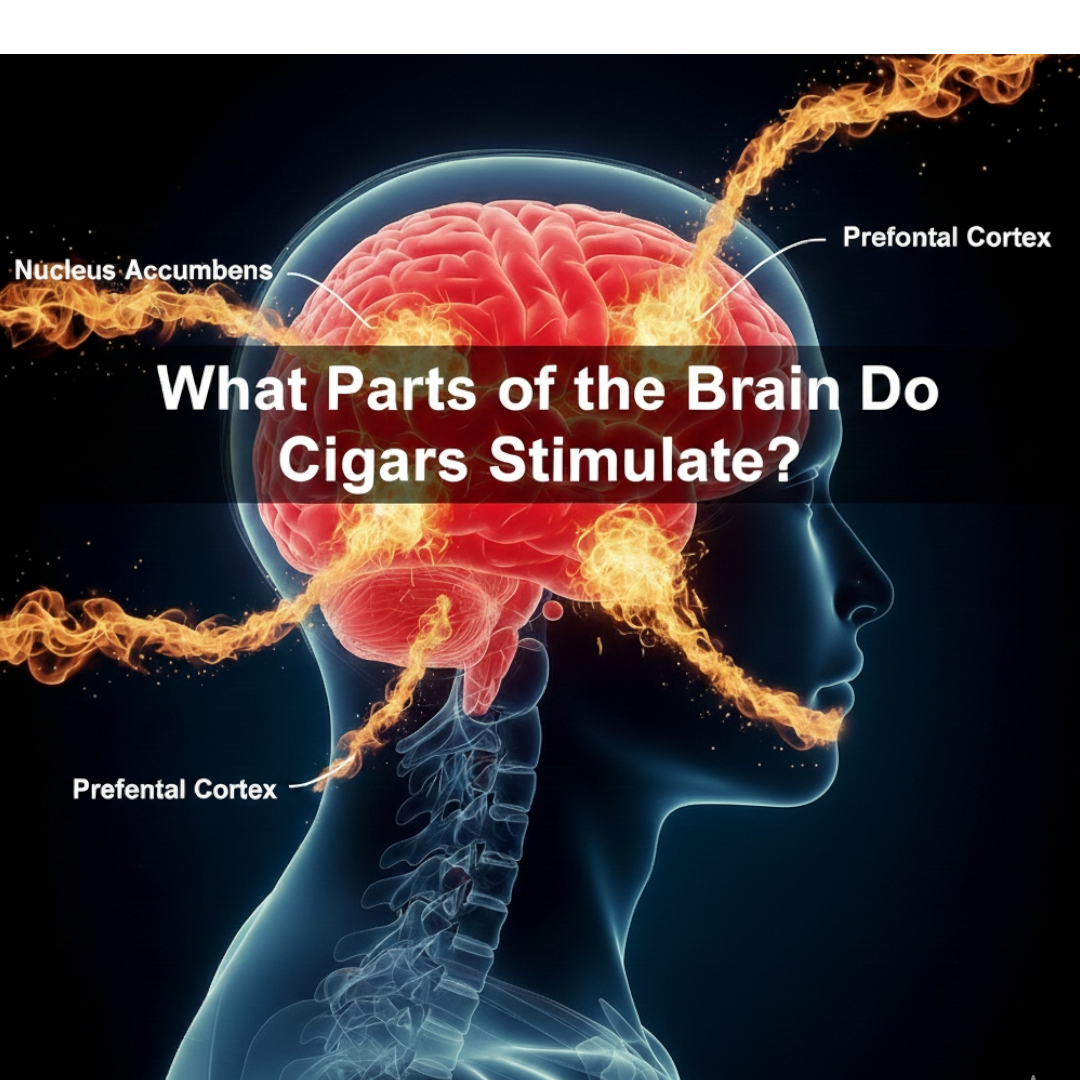
Ever wondered what happens inside your brain when you light up a premium cigar? Within seconds of that first puff, nicotine travels through your bloodstream and triggers a fascinating chain reaction across multiple brain regions. These areas control everything from pleasure and memory to emotions and the flavors you experience.
Understanding how cigars affect your brain can deepen your appreciation for the experience. Whether you’re new to premium cigars or just curious about the science, this guide explains it all in simple terms.
Your Brain’s Pleasure Center: Where It All Starts
When you smoke a cigar, nicotine quickly enters your bloodstream and reaches your brain. The first stop is a small region deep in your brain called the ventral tegmental area (VTA). Think of this as your brain’s pleasure headquarters.
The VTA contains special cells that produce dopamine—the chemical that makes you feel good. When nicotine reaches these cells, it’s like flipping a switch. The cells release dopamine into another area called the nucleus accumbens.
This dopamine flood creates those feelings of satisfaction and relaxation that cigar smokers describe. It’s the same basic system that lights up when you eat delicious food or hear your favorite song. The difference? Nicotine activates it powerfully and reliably, which explains why the ritual of smoking a quality cigar can be so deeply satisfying.
The Thinking Brain: Your Prefrontal Cortex
Behind your forehead sits the prefrontal cortex—your brain’s control center. This region handles important tasks like paying attention, making decisions, and planning ahead.
Nicotine affects this area by activating special receptors throughout it. When this happens, many smokers notice improved focus and mental clarity. Nicotine can enhance certain cognitive functions, which is one reason why people often pair cigar smoking with contemplative activities like reading or deep conversation.
The prefrontal cortex is also involved in how you perceive and appreciate the complex flavors in a premium cigar, integrating sensory information with memory and emotion.
The Emotional Brain: Your Amygdala
Deep inside your brain sits an almond-shaped region called the amygdala. This is your emotional command center. It processes feelings, stores emotional memories, and plays a crucial role in how you experience pleasure and relaxation.
Smoking affects how the amygdala works. Brain scans reveal changes in activity patterns in this region. Nicotine triggers dopamine release to the amygdala, which contributes to the relaxation and stress relief many people experience when enjoying a cigar.
The amygdala is particularly important in forming strong emotional associations. When you enjoy a cigar in a pleasant setting—perhaps with good friends or after a meaningful achievement—your amygdala helps encode that entire experience as a powerful positive memory. This is why certain cigars can become deeply connected to specific life moments.
The Flavor and Memory Connection: How Cigars Create Lasting Impressions
Here’s where cigar enjoyment becomes truly fascinating. The flavors you experience when smoking a premium cigar don’t just register as taste—they create emotional memories that can last a lifetime.
When you draw smoke from a cigar, flavor molecules travel to multiple brain regions simultaneously. Your gustatory cortex (taste center) processes the basic tastes, but the real magic happens when these signals reach your olfactory bulb (smell center).
The olfactory bulb has direct connections to both your amygdala and hippocampus. This means smell and taste signals travel straight to the regions responsible for emotion and memory, bypassing the brain’s usual sensory processing center.
This explains why a specific cigar blend can instantly transport you back to a particular moment—your first cigar with your grandfather, a celebration with friends, or a quiet evening of reflection. Smell and emotion are stored as one memory, which is why the aroma of a particular tobacco leaf or wrapper can evoke such powerful feelings.
The insula acts as a hub, integrating all these sensory signals with emotional context. When you taste cedar notes, leather, cocoa, or spice in a cigar, your brain isn’t just identifying flavors—it’s weaving them together with emotions, memories, and physical sensations to create a complete experience.
This is why learning to identify flavors in cigars can be so rewarding. As you develop your palate, you’re not just training your taste buds—you’re creating a library of sensory memories that enhance every future smoke.
The Craving Center: Your Insula
Perhaps the most fascinating brain region affected by cigars is the insula. This area, tucked deep in your brain’s folds, connects your body’s physical sensations with your conscious awareness.
Scientists have discovered that the insula plays a powerful role in how we experience smoking. When damage occurs to this area, people can experience dramatic changes in their relationship with tobacco. One fascinating finding showed that damage to this area increased the odds of quitting effortlessly by over 136 times compared to damage elsewhere.
The insula processes all the physical sensations of smoking: the feeling of smoke in your mouth, the throat sensation, the chest expansion, the weight of the cigar in your hand. It integrates these bodily feelings with your conscious mind to create the complete sensory experience.
When experienced cigar smokers see cigars or smell tobacco, the insula activates, preparing the brain for the full sensory experience. This is part of what makes cigar appreciation such a rich, multidimensional activity.
Other Important Brain Regions
The Thalamus: Your Information Gateway
The thalamus acts like a relay station for sensory information. Cigar smoke affects how this region processes information, influencing alertness and attention. It connects extensively with your prefrontal cortex to help maintain focus—one reason why many people enjoy cigars during focused activities.
The Hippocampus: Your Memory Center
Your hippocampus forms new memories. Smoking increases activity in this region, which helps explain why smoking becomes so strongly associated with certain situations—your brain is actively forming memory connections between smoking and those contexts.
When you enjoy a cigar during a special occasion, your hippocampus works with your amygdala to create a lasting memory that includes not just the event but also the sensory experience of the cigar itself.
The Brain Stem and Cerebellum
These lower brain regions control basic functions. The brain stem manages breathing and heart rate, while the cerebellum handles coordination. Both show changed activity patterns in response to tobacco smoke, contributing to the overall physical experience of smoking.
How Your Brain Creates the Complete Cigar Experience
What makes cigar smoking unique is how it engages multiple brain systems simultaneously. You’re not just experiencing nicotine effects—you’re combining taste, smell, touch, visual appreciation, and emotional context into one integrated experience.
When you pair a cigar with whiskey or coffee, you’re adding additional layers of sensory input that your brain weaves together. The gustatory cortex processes multiple flavors, the olfactory system combines aromas, and the reward system responds to the pairing’s complementary elements.
This is why cigar aficionados talk about complexity and balance—they’re describing how well different elements work together to create a harmonious experience that your brain finds deeply satisfying.
How Cigars Differ From Cigarettes
While cigars and cigarettes both contain nicotine, they’re typically used very differently. Cigar smoke is more alkaline, making it harsher to inhale deeply into the lungs.
Most cigar smokers don’t inhale the same way cigarette smokers do. The experience focuses on flavor appreciation and the ritual itself. Nicotine absorbs through the mouth and throat, with a slower and steadier delivery pattern compared to inhaled cigarette smoke.
This difference affects the overall brain experience. The slower delivery allows you to focus more on flavor perception and the meditative aspects of smoking, rather than seeking rapid nicotine spikes.
The Chemical Symphony in Your Brain
Nicotine doesn’t just affect dopamine. It triggers release of multiple brain chemicals simultaneously:
- Norepinephrine: Increases alertness and mental clarity
- Serotonin: Contributes to mood and relaxation
- Glutamate: Enhances cognitive processing
- GABA: Promotes calmness
- Endorphins: Natural feel-good chemicals
This multi-chemical effect creates the complex subjective experience of cigar smoking. It’s not one simple effect—it’s a carefully orchestrated response involving multiple brain systems working in harmony.
Memory Formation and Cigar Rituals
The ritual aspects of cigar smoking create powerful memory associations. When you follow a consistent routine—selecting a cigar, cutting it properly, toasting the foot, taking that first draw—your brain recognizes these patterns and anticipates the reward.
Foods that we associate with positive memories or comfort are often perceived as tasting better, and the same principle applies to cigars. A cigar enjoyed during a celebration will carry those positive associations forward, making future smokes of the same blend evoke those happy feelings.
This is why choosing the right cigar for special occasions matters. You’re not just selecting tobacco—you’re choosing what memory marker will be attached to that moment.
Understanding Flavor Perception in Cigars
The complexity of flavors in premium cigars engages your brain in sophisticated ways. When expert smokers describe notes of leather, cedar, chocolate, coffee, nuts, or spices, they’re drawing on their brain’s ability to recognize these aromatic compounds.
Your gustatory cortex identifies basic tastes (sweet, salty, bitter, sour, umami), while your olfactory system recognizes thousands of different aromatic molecules. The combination creates what we call flavor.
As you develop your palate, you’re literally training your brain to recognize subtler distinctions. This is why experienced smokers can detect flavor transitions throughout a cigar—their brains have learned to pay attention to these changes.
Why Cigar Enjoyment Is So Personal
Everyone’s brain is wired slightly differently based on genetics and experience. This explains why choosing the right cigar is such a personal journey.
One person might love the rich, earthy flavors of a maduro wrapper because their brain has positive associations with similar flavor profiles. Another might prefer the smooth, creamy notes of a Connecticut wrapper.
Your flavor preferences are shaped by your entire life experience—the foods you grew up with, positive and negative taste memories, and even cultural background. When you find a cigar you love, it’s because that particular flavor profile resonates with your unique neural wiring.
The Bottom Line
Cigars stimulate multiple connected brain regions:
- Ventral tegmental area and nucleus accumbens (pleasure/reward)
- Prefrontal cortex (thinking and focus)
- Amygdala (emotions and memory formation)
- Insula (sensory integration and bodily awareness)
- Olfactory bulb (smell and flavor)
- Gustatory cortex (taste perception)
- Thalamus (attention and alertness)
- Hippocampus (memory creation)
The experience of smoking a premium cigar involves far more than just nicotine. It’s a complex interplay of sensory stimulation, emotional processing, memory formation, and chemical responses that create something uniquely satisfying.
Understanding these neural mechanisms helps explain why cigar smoking has remained a cherished tradition across cultures and generations. The combination of flavor appreciation, ritual, social connection, and neurological reward creates an experience that engages your brain on multiple levels.
For cigar enthusiasts, this knowledge adds depth to every smoke. When you light a premium cigar, you’re not just enjoying tobacco—you’re participating in a sophisticated sensory experience that involves your entire brain, creates lasting memories, and connects you to a rich tradition of appreciation and craftsmanship.
Deepen Your Cigar Knowledge
Want to enhance your cigar experience? Explore these helpful resources:
- Beginner’s Guide to Cigars – Your complete resource directory
- Best Cigars for Beginners – Top 30 picks to start your journey
- Understanding Cigar Flavors – Learn to identify tasting notes
- Cigar Pairing Guides – Discover perfect drink combinations
- How to Choose Wedding Cigars – Create memorable moments
- Cigar Storage Guide – Preserve your premium cigars properly
Subscribe to our newsletter and find out about all new posts
Check out our latest posts
- How a Cigar Is Made, From Seed to Shop

- Top 30 Best Winter Cigars (2026): Reviewed by Flavor, Body and Smoke Time

- Cigar Ring Gauge in mm: Every Size, and What Thickness Actually Changes

- Horacio 8 Classic Review: A Small, Nutty Costa Rican Everyday Smoke

- Karina Owen: The Woman Who Built Her Own Name (Part 3 of 3)

- Horacio Heritage 6 Review: A Full-Bodied Costa Rican With a Perfumed Floral Edge

- Karina Owen: The Years That Taught Her People (Part 2 of 3)

- Brun del Ré Privado Gran Toro Review: A Two-Hour Costa Rican Puro

