

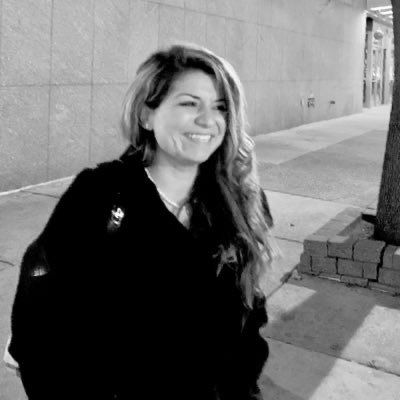
Part 1 of this interview ended with a door Karina Owen left unlocked. She had changed her degree, kept her credits, and told herself that medicine was still there if she ever wanted to come back to it.
She never went back through that door. What she did instead is the part of her life almost nobody in the cigar industry knows about, and it is the part that explains how she works today as a cigar industry consultant.
She spent years working with orphans, with young people in trouble, and with adults inside the prison system.
Nothing about that work pays in an industry like this one. It does not open doors, it does not impress a room, and until now she has rarely mentioned it. But everything she is known for today, the reading of people, the patience, the refusal to take things personally, was built in those years.
If we listen, and learn to filter what people are actually telling us underneath the words, we learn something new. And doors open inside us that we did not know were there.
The woman who changed her direction
The turn did not come from a plan. It came from a conversation.
“While I was in Arizona, I worked for an incredible woman named Jane Moore at a hospital. She had spent years working on the floor as a nurse, and one day I asked her why she had moved into an office position. She told me a story that stayed with me. It made me realize there was so much more to helping people than medicine alone.
“I’ve always believed certain people come into your life at the right time. Jane was one of those people for me.”
She does not tell me what the story was. I did not ask twice.
Think about the size of that, though. A young woman who had spent her childhood being trained for one industry and her adolescence preparing for another asks a colleague a passing question about a career move. The answer changes the direction of her life. She was not looking for a sign. She was making conversation.
Stop there for a second, because this is not a story about luck.
The people who change our direction almost never announce themselves. There is no sign. A colleague, a friend, someone you end up sitting next to at a dinner, telling you why they made a choice. An ordinary day. A question you asked without thinking.
We all get those days. The difference is whether anyone is listening.
She was. She had been listening since she was four years old, sitting quietly in rooms where nobody expected a child to understand a thing.
“As I started getting better, I knew I wanted to keep moving forward. I had already earned my credits, and I never wanted my parents to feel like the time, effort, or money they had invested in my education had been wasted. So I locked in those credits and switched gears toward behavioral health.
“My goal was to eventually have a double degree so I could better assess people who came through triage, especially those who had experienced abuse. I wanted to understand the person behind the behavior, not just treat what was happening on the surface.”
Read that goal again. She wanted a second degree so she could sit in a hospital triage and see what had happened to someone before they found the words for it.
That is a young woman building herself a set of eyes. Not for a career. Because she wanted to help, and she had worked out that you cannot help what you cannot see.
And if you read Part 1, you already know where she learned it. Not on purpose. Nobody sat her down. She picked it up along the way, as a little girl who simply wanted to spend time with her father.
Watch. Listen. Work out what is really going on in the room. She learned that in cigar shops, on a chair by the counter, waiting for him to finish. She was about to use it somewhere he never took her.
“That path eventually led me into behavioral health, where I worked with people society had often already labeled as difficult, damaged, or lost. I worked with orphans, juveniles, and prisoners, and I facilitated classes through the courts.
“Those experiences taught me things no textbook could have prepared me for.”
The first day in behavioral health
“I expected problems. What I found were people. That’s the simplest way I can explain it.”
Karina Owen was working in a sixteen week programme for children. Sixteen weeks is not very long. It is one season. Whatever a child brought in with them, that was the window.
“You can walk into a room and see a diagnosis, a record, a mistake, a statistic. But eventually you realize there’s a human being sitting in front of you who wants to be heard.
“That first day taught me that credentials don’t make you important to somebody. Connection does.”
Half a box of Goldfish crackers

I asked her what connects orphans, young people in the court system and adults inside prison, and what absolutely does not. She answered the second half first, and she answered it on behalf of the children.
“They were all human beings looking for something. Belonging, safety, attention, structure, or simply someone to see them.
“Children, however, hold a unique vulnerability in society. They can become a window into what is really happening inside a home. Sometimes they mirror the behavior they see from adults, whether they’re at school, in public, or with their friends. They often communicate things they don’t yet have the words to explain.”
Then she told me about two of them.
“I remember one very young client who was much younger than I ever expected a child to be when it came to understanding what they were going through. Every day, this child would carefully decide what they were going to wear and lay their clothes out ahead of time. It was such a small thing, but it stayed with me.
“Another child would take food, Goldfish crackers specifically, and hide them in their pockets to save for later at night. It was their little bit of comfort when they were lying in their bed.
“Eventually, I discovered what was happening and, during snack time, I gave that child half of the box.”
She was reprimanded for it. Every child was supposed to receive the same amount.
“There were rules about fairness, and I understood why those rules existed. You couldn’t favor one child over another. I ended up offering some of my checks to the supervisor to cover what I gave.
“But I was also a mother. And knowing where I came from, it was incredibly difficult for me to look at a child who was saving food for the night and simply see a rule that needed to be followed.”
Slow down here. This is the part of the whole interview I keep coming back to.
A small child was putting crackers in their pockets so there would be something in the bed at night. Nobody had reported it. Nobody had noticed. She did.
She gave them half a box. She got in trouble for it. And then look at what she did with the trouble.
She did not say the rule was stupid. She understood the rule, and she said so. She did not make the supervisor the villain. She offered to pay for the crackers herself, out of her own wages, rather than ask anyone to bend anything for her.
Four things in one small moment. Notice what others miss. Act without waiting for permission. Refuse to make anyone the enemy. Carry the cost yourself.
Most of us manage one or two of those on a good day. The people who manage all four, quietly, when nobody is watching, are the people everyone else eventually ends up trusting.
But there is something else in that story, and I do not want it to pass unnoticed.
We all work for a wage. We work so there is food in the fridge, clothes in our wardrobes, a dinner out now and then, something nice for ourselves when the month allows it. That money is our own life, bought one hour at a time.
Karina gave part of hers away. To a child at her workplace. So that one kid, whose days were already harder than most of ours have ever been, would have something in his pocket at night.
We live in a time when a lot of people would rather watch someone go without than give up the little extra they have. That is why this is worth stopping on.
She gave to someone who had less than she did, and nobody was watching her do it. That tells you more about who she is than anything else in this interview.
“That experience taught me something I never forgot. Sometimes what looks like bad behavior, manipulation, or disobedience is actually communication. You have to look deeper to understand what a person is really telling you.”
“Sometimes what looks like bad behavior is actually communication.”
The first ten minutes

I asked what a child in that situation needs first. Not in theory. In the first ten minutes.
“Somebody who is actually present. Not a lecture. Not somebody looking at the clock. Look at them. Listen. Let them know they matter.
“You can talk about consequences later. In the first ten minutes, sometimes the most powerful thing you can give a kid is the feeling that an adult isn’t going anywhere.”
No technique in that. Nothing for a slide. Nothing anybody could sell you.
And if there is a child somewhere in your life right now, a niece, a neighbour’s kid, someone on a team you coach, that is the whole of it. You do not have to find the right words. There are no right words. You just have to come back. And then come back again.
It costs almost nothing. That is probably why we underestimate it.
And I want to push on this, because I think being seen is one of the most important things a child ever gets, and I have watched too many of them go without it.
I am going to be blunt, because polite does not stay with anybody. Sex is easy. Finishing is easy. Wanting a baby is easy. The first years are easy to enjoy, when they are small and everyone around you says how sweet they are.
Being seen is the hard part. That is where children get set aside. Not abandoned, not mistreated, just quietly put down while the adults get on with something else. I have watched it happen more times than I want to count, and I do not think our part of the world is getting better at it.
Try something. Go to the park on a Saturday and just watch for a while. Count how many adults are actually with their children, and how many are standing there with their eyes on a phone while the child calls their name for the third time.
And the park is only where you can see it. The same thing is happening in living rooms all over the country, with nobody around to notice.
You will see it more often than you expected to.
Then look at what she just said. Remember their name. Ask how their day was. Notice when something changes. Keep your word. Smile.
None of that requires a degree in behavioral health. It requires an adult who decides to be there.
People say a young person in trouble made bad choices. I asked her what she says back.
“I’d say, you’re looking at the choice. I’m looking at the person who made it.
“That doesn’t mean I excuse bad behavior. It means I want to understand what happened before I decide who somebody is. I’ve seen enough to know that a kid can make a terrible decision and still have an extraordinary life ahead of them.”
Then three words, with nothing around them.
“Juveniles become doctors.”
And for the reader with no training, no budget and no idea what to do about a kid who is struggling, her answer costs nothing at all.
“Show up. Consistency is underrated. You don’t need a degree. You don’t need a million dollars. You don’t need the perfect speech.
“Be the adult who remembers their name. Ask how their day was. Notice when something changes. Keep your word. Smile. Sometimes one stable person becomes the crack of light somebody needs.
“Be the light switch that turns on in someone’s life.”
Inside the prison system

The prison system was a different room, and Karina Owen walked into it expecting the worst.
“I thought I’d find people defined by what they had done. Instead, I found people with stories. The number one principle I follow is, I want to hear your story.
“Some stories were painful. Some were difficult to hear. Some involved choices they absolutely had to own. But they were still people who needed help.”
Most people look at a man coming out of prison with one question behind their eyes. What did he do? The verdict is already in. It happens at the petrol station, in the queue at the shop, when a face turns up in the local news. It takes about a second, it costs nothing, and that is exactly the problem.
She never did that. But here is the part people miss when they hear it: she never took the responsibility off them either. Choices they absolutely had to own. She is not soft. She is not excusing anyone. She is holding two things at the same time, and most people cannot.
What you did is yours. And you are still a human being sitting in front of me.
She was not there to decide who they were. She was there because she believed a person can change, and because she wanted to be part of that change happening. That is the only reason anyone walks into a room like that on purpose.
And now look at the whole thing at once.
A twelve year old washing dishes so her family could eat. A young woman changing her degree so she could see what had happened to someone before they told her. Half a box of crackers paid for out of her own wages. A room full of men nobody else wanted to sit with. The act she put on in her own hallway so her children would not have to carry her day.
Same woman. Same thread, running through all of it.
Helping people is not a job she took. It is not a service she sells, and it is not something she learned on a course.
It is in her DNA.
Everything else in this article grew out of that one thing and not the other way around. The business, the relationships, the name on the door, all of it came after. Take the helping away and there is no Consigliere Consulting, because there would be no reason for it to exist.
She adds one line about those years that she does not explain, and I have left it exactly as she wrote it: some cases were different from others, and were treated very differently. Those stories, she says, are meant for a different day.
I asked whether she was ever afraid. Her answer starts somewhere I did not expect.
“Fear is something I knew far too well as a child. I’m not going to sit here and pretend I’ve never felt it as an adult. I have.
“But I learned something along the way. Fear and worry can sit in the same room without being given the same authority. Worry may tell me what could go wrong. Fear may tell me to stop. I listen to both. I respect what they’re trying to tell me. But I don’t hand either one the wheel.”
“Fear can come along for the ride. It just doesn’t get to drive.”
Pressed on the actual danger, she is almost dismissive of it, and the sentence that follows tells you what she was doing in those rooms all day.
“I was not afraid I was going to get hit in the face by someone who just came out of prison. I had to redirect. Talk.”
What she wants people to understand about the men and women she met inside is short and unsentimental.
“Humanity doesn’t disappear because someone made terrible choices. They say the eyes are the windows to the soul, and I agree. These are people who have been away a long time.
“Some people will never get another chance. Some people will. But if you spend your life believing people are only the worst thing they’ve ever done, you’re going to misunderstand a lot of human beings.”
Then home to her own children
She was raising three children of her own during those years.
“I had to learn how to compartmentalize. When I walked through my own front door, my kids needed their mother. I would lay with them. They didn’t need to carry the weight of what I had seen that day.
“Was it always easy? No. But motherhood taught me something too. You don’t always get to fall apart when you want to. Sometimes people are depending on you.”
Compartmentalise is a tidy word for something that is not tidy at all.
What she is describing is a woman who spent her working day inside other people’s worst days, drove home, walked through her own front door and lay down next to her children with none of it on her.
If you have ever come home heavy, you know how hard that is. You know how often we fail at it, and who pays when we do. It is usually the people nearest the door.
And let us be honest about what kind of day we are talking about.
We all hear people complain about a tough day at work. Sales, trades, restaurants, offices. Ordinary jobs, hard jobs, jobs I have done myself. But they are jobs you can put down when the clock says so. You close the laptop, you lock the van, you walk out and the day stays behind you.
Work where you carry other people does not stay behind you. It follows you to the car. It follows you through your own front door. It is still there when you are lying next to your child at bedtime, whether you want it or not.
So what she is describing is not calm. It is acting. For the first couple of hours after she got home, she was performing a woman who had not seen what she had seen that day, because her brain had not caught up yet and her children should not have to wait for it.
An act, put on for the people she loves most, so that they never have to pay for it.
That is not strength the way the word normally gets used. It is a decision, made again every single evening. And it is the only kind of strength I have ever been impressed by.
It did not leave her when the job did.
“It changed the way I see people. I often think about some of my clients, the children. Where are they now? Are they safe? It changed how quickly I judge. And it gave me a deeper understanding of how fragile circumstances can be.
“Those years didn’t make me softer. They made me stronger in a different way.”
What those years built
Here is where the story turns, and it turns on something she said almost in passing.
“Before you can influence someone, you have to understand them. You have to understand what motivates them, what scares them, what they value, and sometimes what happened to them before they ever met you. That understanding changes everything.”
She is talking about a child in a sixteen week programme. She is also describing, word for word, what she sells today.
“I don’t take everything personally. That’s huge. Somebody can be angry, defensive, arrogant or difficult. I don’t immediately think, they don’t like me. I start asking, what’s underneath this? Ego? Fear? Money? Control? Bad experience?
“Once you stop reacting emotionally, you have options. That’s one of the biggest advantages I’ve carried from those years.”
Every consultant alive says they are good with people. It is the cheapest line in the business and almost nobody can prove it.
Hers is different, and not because she reads people better than the rest of us. It is where she learned it. She learned it in rooms where getting somebody wrong cost a child a night’s comfort or a man his second chance, and where there was no bonus waiting for her if she got it right.
And here is the thing I would want anyone building something to take from this article.
The skill that ends up carrying your whole career is very often the one you picked up somewhere that had nothing to do with it. In the detour. In the job you took because life went sideways. In the years you were sure you had lost the path.
She thought she had lost the path. She was building the thing she now sells.
One small detail she mentions in passing: those years also taught her to write everything down, in detail. Ask anyone who has worked with a great consultant what separates them from a mediocre one, and you will hear some version of that.
Consigliere Consulting
The company is called Consigliere Consulting. Karina Owen advises cigar brands, retailers, event organisers and athletes, along with people who want to launch something of their own and do not yet know how.
I asked what would surprise people most about the work if they saw it up close, expecting something operational. She answered about temperament.
“How much passion is involved, and how much fight I have in me. You learn very quickly that everybody has a motivation. Sometimes it’s money. Sometimes it’s ego. Sometimes it’s fear. Sometimes they simply want to know that they’re respected. Once you understand what matters to somebody, communication gets a whole lot easier.”
Passion and fight. Not strategy, not contacts, not a method she could write down and sell. The two words she picks are the two words you would use about the woman in that sixteen week programme.
Because it is the same energy. She did not leave it behind in those rooms and pick up a professional version for business. She carries one gear and it is all the way forward. The same wholehearted thing that made her notice a child’s pockets is what she puts into somebody’s brand launch, somebody’s store, somebody’s name.
People talk about passion in business the way they talk about synergy. A word for a slide. Hers is the kind that will not let you rest. It drives you past the point where any sensible person would stop, and it is a hard way to live. It is also the only reason anything she has built exists at all.
She dates the beginning of the company to a single job nobody paid her for.
“I facilitated celebratory cigars for the Philadelphia Eagles. That one meant a lot to me because I facilitated it as Karina Owen. Not because of my family name. Not because somebody handed me an opportunity. I made the relationships, put the pieces together and got it done. I was aggressive.
“The cigars were recommended to me and selected for the occasion and the people involved. But honestly, what stayed with me wasn’t the cigar itself. It was realizing, I did this. No pay, no acknowledgment, not even a pat on the back.
“That was the birth of me starting my own business. I had spent years being connected to an industry, but that was a moment where I saw what I could build with my own name.”
She adds one line about who was around her when it happened, and it is the same list that turns up every time she talks about anything that mattered to her.
“I have a family, a church, and friends who have grown with me.”
Note what she counts as the founding moment. Not a client, not an invoice, not a launch. An unpaid job she pulled off alone, after which nobody said thank you. What she took from it was not resentment about the silence. It was information: this works, and it works without the name.
Distribution, shelf space and what she can open
Ask anyone in this trade where new cigar brands die and you will hear the same two words: distribution and shelf space. I asked Karina Owen what she can open that a newcomer cannot open alone.
“A relationship can get you through a door. It cannot keep you on the shelf.
“I’ve spent my life learning the difference between having a contact and actually having a relationship. I know who answers the phone, who makes decisions, who influences the person making the decision, and probably most importantly, who should not be approached the same way.
“It’s training. And it’s not burning bridges.
“That’s what I bring. I can shorten the distance between a brand and the right people. But once I get you in the room, the product has to earn its place. I’m not interested in putting something somewhere just to say I did it. I want it positioned where it has a chance to win, for everyone.”
There are two things buried in that answer worth pulling out. The first is the distinction between a contact and a relationship, which sounds like a cliché until you read the part about knowing who should not be approached the same way. That is not networking. That is the same skill she used to work out why a child was laying out clothes the night before.
The second is that she refuses to spend a relationship on a product she does not rate. In a business built on favours, the scarce thing is not access. It is somebody willing to not use it.
Retail is the same principle pointed at a different problem. Everyone wants to talk about stock and licences. She wants to talk about the person walking through the door.
“I want to know who is actually going to walk through that door and why they would come back. I want to see what the customer sees. Then I start asking questions. Because sometimes the answer isn’t, you need more inventory. Sometimes it’s, you haven’t figured out who you are yet.”
On events, she has a test that has nothing to do with the photographs.
“A photograph tells you what happened. It doesn’t tell you what happened after. Did people connect? Did somebody discover a brand? Did a relationship begin? Did somebody make an introduction that wouldn’t have happened otherwise? Did people leave talking about the experience?
“Those are the questions you ask on the way home.”
She may not have noticed what she just did there.
In Part 1 she told me about a phrase her father used to end the working day. At the end of the night. When the phones stop, the meetings are over, the noise goes quiet and you are left alone with yourself. Did I show up today? Did I do right by the people depending on me?
That is the same question. She has taken the thing her father said at the end of a day on the road and turned it into how she measures her own work. The car has changed. The question has not.
And on the celebrity partnerships this industry loves and so often gets wrong:
“The person has to actually fit the story. I’m not interested in putting a famous face next to a cigar because somebody thinks the name will sell boxes. People are smarter than that. If the relationship doesn’t make sense, consumers feel it.
“The best partnerships feel natural. The person believes in it, the audience believes it, and the brand doesn’t have to scream for attention. It’s vendors and reps not stepping on toes but working together. Most of all it’s keeping everyone’s name clean, because we all work hard in this industry.”
With you, not for you: how she works with clients

Karina Owen describes her consulting model as working with a client rather than for one. I asked what that looks like on an ordinary Tuesday afternoon.
“It means I don’t wait around for somebody to tell me what to do. If I see a problem, I address it. If I see an opportunity, I pursue it. If I know someone who can solve something, I’m making the introduction.
“I’m comfortable telling a client when I think they’re making the wrong move. That’s part of the value.”
One line in that answer made me laugh, and it is the only competitive thing she says in eighty-one questions.
“If I see someone copying my work, I know I did my job.”
She has walked away from work.
“I’ve walked away from situations where the relationship wasn’t built on trust or where someone wanted the results without being willing to do the work. I don’t need every client. I need the right clients.”
“My name is attached to what I do. That’s worth more to me than a check.”
The clients she does her best work with are, in her word, hungry.
“Hungry people. Not desperate. Hungry. There’s a difference. I work best with people who know they have something worth building but are willing to listen, adapt and execute. I don’t need someone who agrees with everything I say. I actually like being challenged.
“Give me somebody with a vision, some humility and a willingness to work, and I’ll go to war with them. I’ll fight for your name like I fight for my own.”
Her measure of whether an engagement worked comes, like a lot of what she says, straight out of the years described earlier in this article.
“Something I learned in medical school. Assess, diagnose, plan, evaluate. If I disappear and the relationship keeps producing opportunities, that’s success. I want the client to have stronger relationships, better positioning, more confidence in their direction, and opportunities they couldn’t see before we started.
“I’m not trying to create dependency. I’m trying to create momentum.”
For anyone reading this who is thinking about picking up the phone, she was specific about what to bring to that first conversation.
“Know what you want. Know your why. You don’t have to have the whole plan, that’s part of why you call me. But you should be able to tell me what you’re trying to accomplish, where you’re stuck and what you’re willing to invest. Time, money, relationships, whatever it takes.
“Don’t come to me looking for magic. Come to me ready to build.”
And not only from this industry. “I take calls from people in all areas, not just cigars.”
Five years out, she does not want Consigliere Consulting to be big in the ordinary sense.
“Bigger, but not diluted. I don’t want to become some giant machine where everybody gets a piece of my name and nobody knows what they actually bought. I want Consigliere to be known for discretion, relationships, strategy and execution.
“Cigars will always be part of me, but I see the company growing into hospitality, entertainment, events, talent and strategic partnerships.”
One ambition inside that is not a business ambition at all. She wants the company to be somewhere people can come if they need a job and are willing to work.
The last thing she said about the business is the one that stayed with me, because it is the same sentence the little girl in the back of the car would have understood.
“I want people to hear, Karina is involved, and immediately understand that something serious is being put together.”
It is a strange sentence for a consultant. Most people in this position want their name on the door and on everything that comes through it. She wants the name to mean something specific enough that it does not need her in the room.
Where that comes from is not hard to guess, and it is the subject of Part 3.
Thank you, Karina. You said the number one principle you follow is that you want to hear people’s stories. You trusted me with yours, and it was an honor to carry it.
Part 3 of the Karina Owen interview is about the rooms she still has to prove herself in as a woman in the cigar industry, what she has given up, and the one cigar she never got to smoke.

Karina Owen runs Consigliere Consulting, based on the East Coast. She advises cigar brands, retailers, event organisers and individuals launching their own labels. Instagram: @staynclassyowen.
This is Part 2 of a three-part interview in the VDG Cigars series Women Who Shape the Cigar Industry. Read Part 1, Karina Owen: At the End of the Night.
Subscribe to our newsletter and find out about all new posts
Check out our latest posts
- Eladio Diaz La Diana Brevas Review: A Short, Full Dominican With Real Depth

- Oris Erhuero Interview Part 1: The Lost Passport That Changed Everything

- Mild to Medium Cigars: What the Category Actually Means

- Arturo Fuente Especiales Review: Serious Flavor at an Everyday Price

- Karen Berger Ixtelli Toro Review: A Nicaraguan Puro Named for Estelí Itself

- Halftime Maduro by Karen Berger Review: A Short, Full Maduro That Burns Slow

- Arturo Fuente Opus X Robusto Review: A Dominican Icon Lives Up to Its Name

- What Is a Connecticut Cigar? The Wrapper Explained

- How a Cigar Is Made, From Seed to Shop

- Top 30 Best Winter Cigars (2026): Reviewed by Flavor, Body and Smoke Time

- Cigar Ring Gauge in mm: Every Size, and What Thickness Actually Changes

- Horacio 8 Classic Review: A Small, Nutty Costa Rican Everyday Smoke

- Karina Owen: The Woman Who Built Her Own Name (Part 3 of 3)

- Horacio Heritage 6 Review: A Full-Bodied Costa Rican With a Perfumed Floral Edge

- Karina Owen: The Years That Taught Her People (Part 2 of 3)

- Brun del Ré Privado Gran Toro Review: A Two-Hour Costa Rican Puro

- Aroma de Nicaragua and Hernan Lopez: Up to a Year in the Pilón, and the Nicaraguan Cigar Built Without the Pepper

- Interview with Karen Berger

- The $1 Challenge: Helping Philadelphia Youth With the Roberto Martinez Foundation

- Robusto vs Toro: Real Smoke Times, Flavor and Which One to Choose

