
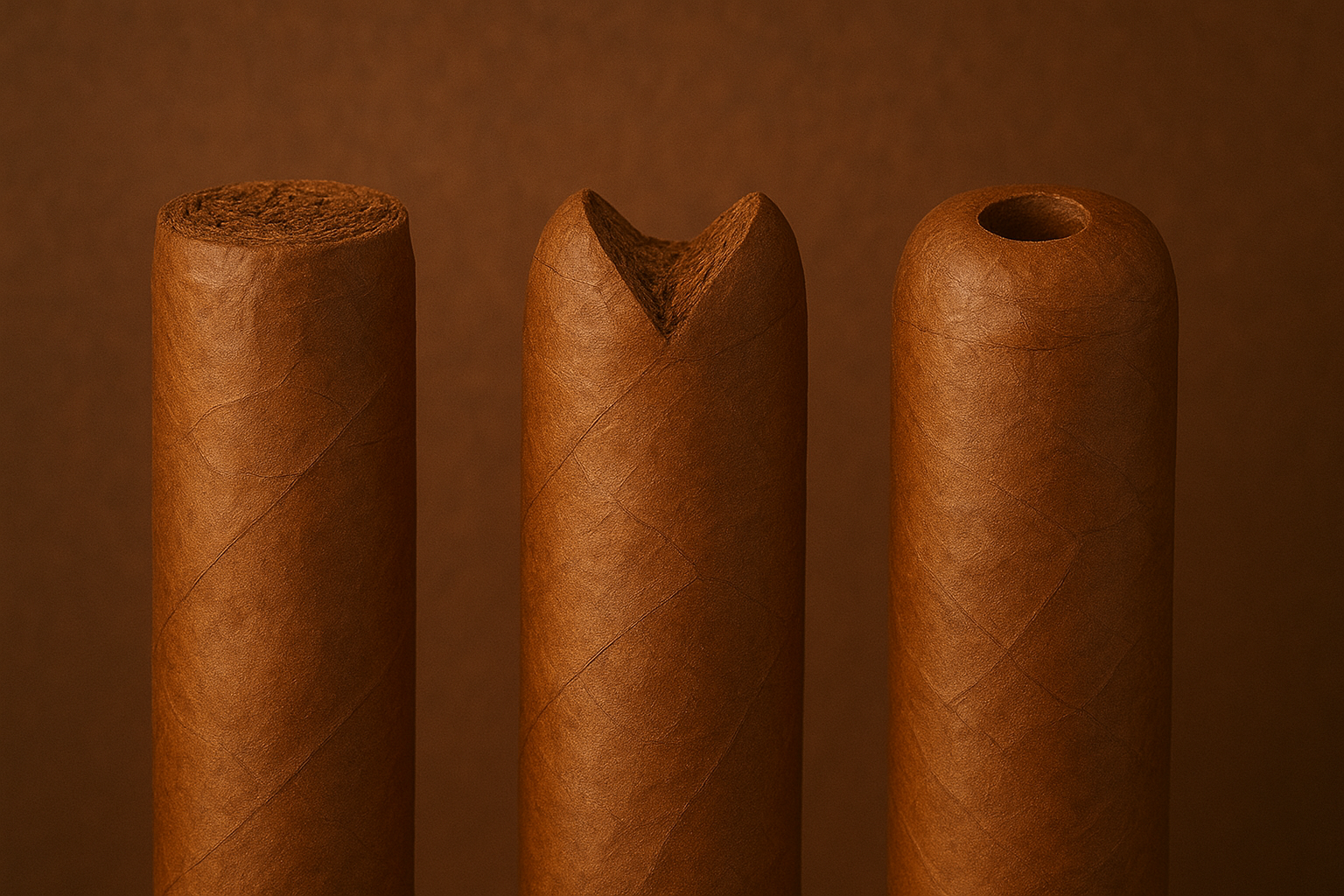
One of the first rituals before lighting up a fine cigar is the cut. While it might seem like a small detail, the way you open the cap has a real influence on the draw, the burn, and ultimately, how the flavors express themselves. Among enthusiasts, three cutting styles dominate: the straight cut, the V-cut, and the punch cut. Each method offers its own character, along with a few considerations to keep in mind.
Straight Cut

The straight cut is the classic approach — simple, clean, and effective. With a sharp guillotine or scissors, the cap is sliced off to reveal the full diameter of the cigar’s head. This creates an unrestricted pathway for smoke, making it the most open style of cut.
Pros
Delivers the most open draw, allowing full airflow and maximum smoke output.
Highlights the blend’s complexity by letting all filler tobaccos burn evenly.
Works especially well with larger ring gauge cigars that need good airflow.
Cons
If the cut is too deep, the wrapper may unravel and compromise the cigar’s construction.
Can sometimes let small bits of tobacco into the mouth during the smoke.
The straight cut is perfect for smokers who want the cigar to perform as the blender intended, with nothing holding back the flavors.
V-Cut

The V-cut, sometimes called a wedge cut, adds a different character to the experience. Instead of removing the entire cap, a blade carves a deep notch into the head of the cigar, creating a V-shaped channel. This exposes the filler in a concentrated way without sacrificing the shoulder of the cigar
Pros
Produces a focused stream of smoke, which many smokers find intensifies flavor perception.
Keeps the edges intact, often preventing stray bits of tobacco from reaching the mouth.
Adds variety to the smoking ritual — a different texture and sensation compared to a straight cut.
Cons
Not ideal for very slim cigars, where the wedge can cut too deeply and damage the structure.
If the cut isn’t deep enough, the draw may feel a little tight.
For smokers who like a balance between openness and concentration, the V-cut is an elegant middle ground — enhancing intensity without sacrificing comfort.
Punch cut

The punch cut uses a small, circular blade to bore a neat hole into the center of the cap. Instead of exposing the entire head, it opens a single aperture while leaving the edges of the cigar intact. This method is clean, tidy, and highly portable, thanks to the compact design of most punch cutters.
Pros
Creates a concentrated, smooth draw that feels consistent throughout the smoke.
Helps the cigar hold its structure, reducing the chance of unraveling.
Keeps the mouth clean, with fewer loose tobacco fragments.
Punch cutters are discreet and convenient to carry on a keychain or lighter.
Cons
Restricts airflow, which can soften complexity in larger ring gauge cigars.
Moisture and tar can accumulate in the small hole during longer smokes, sometimes requiring a re-punch.
Not suitable for pointed or tapered cigars such as torpedoes and perfectos.
The punch cut is a great choice for those who enjoy a slower, controlled experience, or who prefer convenience without sacrificing precision.
Which Cut Should You Choose?
There is no single “right” way to cut a cigar. The straight cut offers openness and tradition, the V-cut adds intensity and focus, and the punch provides neatness and control. Many seasoned smokers keep all three tools at hand, letting the cigar itself — its size, shape, and blend — dictate which cut to use.
No matter which method you choose, the key is a clean, deliberate cut. Done well, it preserves the integrity of the cigar and sets the stage for an enjoyable smoke from the very first draw.
Subscribe to our newsletter and find out about all new posts
Check out our latest posts
- What Is a Connecticut Cigar? The Wrapper Explained
 A Connecticut cigar is named after its wrapper. Not the country it was made in, not the filler inside it. The tobacco in the middle… Read more: What Is a Connecticut Cigar? The Wrapper Explained
- How a Cigar Is Made, From Seed to Shop
 The cigar in your hand took longer to make than most people think, and almost none of that time was spent rolling it. Rolling is… Read more: How a Cigar Is Made, From Seed to Shop
- Top 30 Best Winter Cigars (2026): Reviewed by Flavor, Body and Smoke Time
 Winter changes the whole cigar. The evenings start at four. The smoking chair moves closer to the fire, or the cigar moves out to the… Read more: Top 30 Best Winter Cigars (2026): Reviewed by Flavor, Body and Smoke Time
- Cigar Ring Gauge in mm: Every Size, and What Thickness Actually Changes
 Ring gauge is how thick a cigar is. The second number in a 5 x 50 is the ring gauge, and it counts in sixty… Read more: Cigar Ring Gauge in mm: Every Size, and What Thickness Actually Changes
- Horacio 8 Classic Review: A Small, Nutty Costa Rican Everyday Smoke
 The Horacio 8 is a short, medium-bodied cigar that packs plenty of flavor into a compact format. Over 50 minutes it works through sweet almond… Read more: Horacio 8 Classic Review: A Small, Nutty Costa Rican Everyday Smoke
- Karina Owen: The Woman Who Built Her Own Name (Part 3 of 3)
 Something personal before any of this begins. I have been working on Karina Owen’s story for a few months now. Sitting here writing the last… Read more: Karina Owen: The Woman Who Built Her Own Name (Part 3 of 3)
- Horacio Heritage 6 Review: A Full-Bodied Costa Rican With a Perfumed Floral Edge
 The Horacio Heritage 6 is a short, full-bodied cigar with an unusual, perfume-like floral character that sets it apart. Over 45 minutes it works through… Read more: Horacio Heritage 6 Review: A Full-Bodied Costa Rican With a Perfumed Floral Edge
- Karina Owen: The Years That Taught Her People (Part 2 of 3)
 Part 1 of this interview ended with a door Karina Owen left unlocked. She had changed her degree, kept her credits, and told herself that… Read more: Karina Owen: The Years That Taught Her People (Part 2 of 3)
